A Strong Back
The spine doctor warned me that pregnancy would probably make disc herniation worse. It turns out he was wrong.

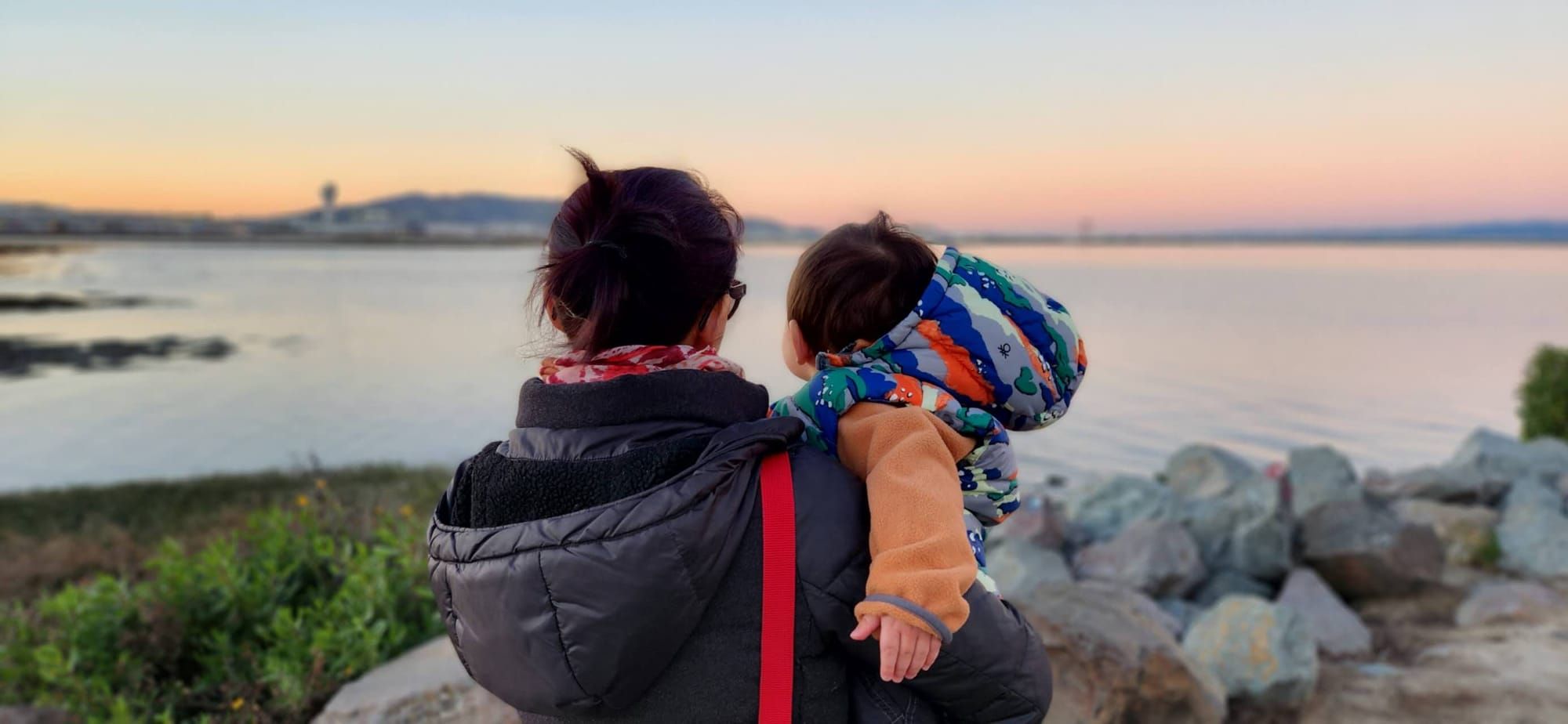
A Strong Back, the September 2025 issue of Fieldnotes from a Watcher, is dedicated to those who have courageously endured chronic pain. This is a personal story, not medical advice. See full disclaimer at the end.
Summer 2022. Appalled by what he saw on the MRI scan, the sports doctor diagnosed me with L4-L5 and L5-S1 disc herniation in the lumbar spine.
We had just moved out of San Francisco, our home of almost 10 years, to a Peninsula town called Burlingame. Over a month of undefined lower back pain followed shortly after we settled into the new house. Weekly physical therapy and countless DIY trial and error ensued, including large amounts of tiger balm, numerous back brace or wedge pillow purchases, and endless YouTube videos offering contradicting advice. With little to no relief, I knew something was different this time from my usual flare-ups that inflicted only minor and temporary discomfort over the years.
Having finally received a diagnosis was a weight off my shoulders. The doctor suggested that I continue physical therapy, but also start a cortisone injection to “put out the fire” first and then “aggressive” acupuncture sessions two to three times a week.
At the time, my husband and I were trying to conceive again after painfully losing our daughter during pregnancy about a year before. It was the most inopportune time to be severely injured with not one but two herniated discs, along with the debilitating sciatica that followed. The doctor warned me that pregnancy would probably make things worse, especially if I wasn’t diligent about treatment.
It turns out he was wrong. Not only did my disc herniation lessen right before we conceived after weeks of physical therapy and acupuncture, I also didn’t relapse during pregnancy. In fact, now two years postpartum, my body and back are stronger than ever. The stamina necessary to carry a 25-pound wiggly toddler with relative ease would be unthinkable to my former, childless self who was unaware and careless of her own body.
What changed?
The short answer is just practice, day in and day out, with no option of giving up. The reality of raising a little human being is that it’s a marathon, and putting one foot in front of the other is the only way to run a marathon. Every single day postpartum has been a gym day.
Here’s an example: My husband and I choose to hold our son as much as possible. Before he started taking his first steps around 14 months old, we walked, cooked, ate meals, and ran errands daily while carrying our boy in our arms or in a baby carrier. We also rocked him to sleep almost every single night until he turned 22 months old and decided to fall asleep on his own. In turn, our son grew attached to these physical contacts, making them harder to break.
These self-imposed demands on our bodies are like strength training; we simply have to figure out a way to get stronger as our boy grows heavier. A protracted history of lower back pain and lumbar injury just two years before regularly makes me nervous. Every time sciatica flares up, I’d wonder if I’ve reached the end of holding my son. Stroller and car rides bring respite, but I’m stubborn. Through repeated strength training, my body and I inevitably grow much closer.
“You will get stronger, I promise. It’s like a full-body workout every day.” I told a dad who bought our baby carrier from Craigslist when we eventually no longer needed it. His daughter was four months old and wanted to be held all the time.
The body isn’t indestructible of course. Unsurprisingly, my back is often sore with low core muscle strength from giving birth and scar tissue that’s prone to disc re-injury. But it seems to be a miracle that almost three years of a pregnancy and postpartum marathon, along with its intense physical toll on the body, didn’t worsen a terribly painful lumbar injury. I’m often in awe of how much the body is capable of.
Biology is magical.
Savoring this story? Subscribe free for monthly essays that stay with you, plus first-year access to The Side View, a private letter about what happens between the published pages.
Prefer a one-time contribution? Support here.
“Your back has been messed up for years!” The spine doctor exclaimed as he pointed at the MRI image before we wrapped up the appointment.
He was not wrong on that front.
Poor posture since childhood and no education around spine health led to years of lower back pain. Most of my teen years were spent sitting, hunching over, and studying, from 7:30 in the morning to 10 at night. Group exercises and PE classes were necessary but not essential, occupying perhaps 10% of daily waking hours.
“Don’t hunch over!” my mom would often command while patting my upper back. It was the only reminder about back “health” that echoed till this day. Education was shockingly scant given the sedentary lifestyle of a Chinese adolescent. And my mother’s reminder frankly had little to do with back health, but more with appearance. “You’d look prettier and taller with your back straight,” she’d explain. But my mom didn’t know better either. And concerns about looks were squashed by the rigid secondary education system in my home country. Nobody should care about their looks (which is considered a distraction) amid the trying years of preparing for gaokao, the infamous national college entrance exam.
So my mother’s command wasn’t effective. Taking care of the body - for health or looks - was at the bottom of the priority list.
Subsequent years in the U.S. were no different. I continued to habitually neglect my body, even as it sustained chronic anxiety from studying abroad and acculturation (including physical and sexual overwhelm of existing among American college students at a southern public school). Ironically, I was very much aware of the anxiety in my mind, but tended to intellectualize to feel “smart” instead of owning or feeling the anxiety itself. It’s no surprise that someone who proudly spends a lot of time in the head ignores the body and its wisdom or warnings, considering them a minor nuisance compared to the “more compelling” anxiety in the mind.
For years, I brushed off the chronic lower back soreness, strained neck and shoulder muscles, clenched teeth (and the resulting TMJ disorders), and increasing pelvic floor tension (which was only discovered much later). I’ve also often needed clear and intellectual reasons to bring awareness to the body. Even as recently as my second pregnancy, I was still convinced that only after the anxiety in the head was “solved,” the body could then follow and heal. While working with a counselor who specializes in perinatal mental health, I admitted to her “I’m not sold” when discussing mindful breathing and body scan meditation as part of the treatment plan, and proceeded to explain why. I was keen on “outsmarting” the body with my mind, unaware of how intimately connected they actually are.
Of course, I am aware that I’m not just what my husband likes to call a “floating brain in a jar.” Every human being has a meat suit, naturally. Aside from the chronic physical ailments that I neglected, there have been more pronounced reasons - what David Brooks calls “agency moments” - that brought me closer to my body, albeit over a long period of time. Profound changes are usually slow. These experiences were as physical as they were emotional. They not so gently nudged me toward seeing the irrefutable union of the body and mind.
After the first-ever heartbreak in my mid twenties as a result of ignoring my own feelings in favor of my then partner’s, months of rumination revealed a world of previously unconscious knowledge about the self. Besides childhood trauma and attachment style, I also realized how little I paid attention to the basics of my body and well-being: a balanced diet, healthy sleep habits, or physical exercises. I questioned, if I wasn’t even taking care of these fundamental (and physical) aspects of my own life, how could I practice physical or emotional self-care that’s crucially necessary in a healthy relationship?
Seven years after that breakup, my husband and I lost our daughter - our first child that was so wanted - to termination for medical reasons. First-trimester ultrasounds and tests discovered not one but two chromosomal abnormalities that occurred randomly. These diagnoses meant that our girl had very little chance of surviving to full term. If by some miracle she did survive, she would have been born into immediate heart surgeries and a laundry list of physical, behavioral, and psychological symptoms through the rest of her life. After exhausting all possible tests and procedures in hope of a miracle to no avail, we made the impossible decision to terminate the pregnancy. Everything happened within four weeks, during which we cried some of the most soul-wrenching tears of our lives. Our world turned upside down.
During a pre-conception counseling session about a year before our loss, the nurse practitioner reassured me, “Your body is designed to do this.” Like many first-time parents-to-be, I was nervous about pregnancy and birth. Having been disconnected from my body meant I rarely considered how resilient and imperfect the body could be. I was oblivious of the fact that even though my body is designed to carry a pregnancy, it’s by no means a precise machine. So when the doctor consoled me after bluntly announcing the dreadful ultrasound findings, “I just want to be very clear that this is not because of something you did; it's unfortunately just mother nature,” I was utterly blindsided.
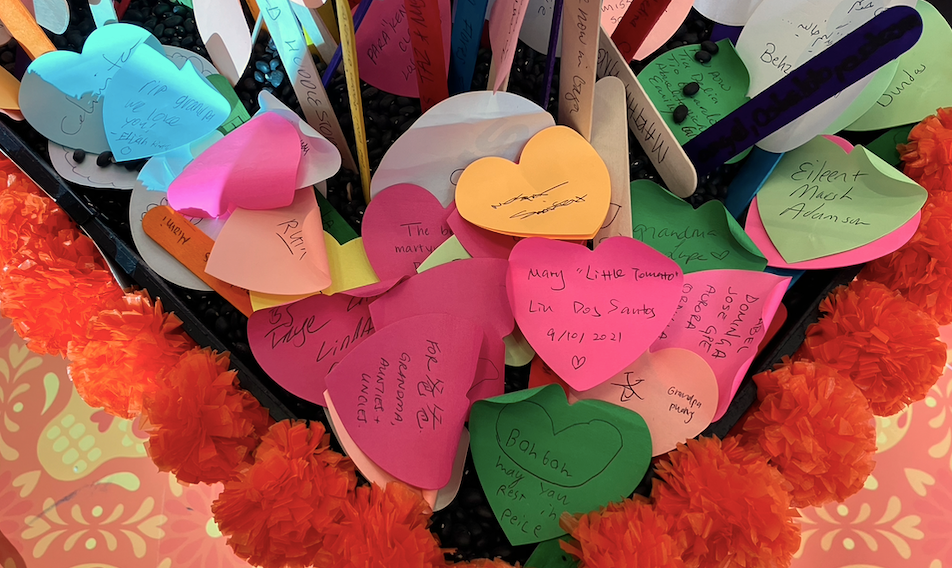
“How can I live fully in this world now, knowing that a part of me is no longer here?” Buried deep in all-consuming grief, I asked my husband shortly after our daughter died. My body had been recovering from the termination procedure slowly, but my heart remained shattered. As grief-stricken as my husband was too, he responded to my melancholy with his usual hopefulness, “By living in this world, she’s living through you as well, because she’s a part of you always.” As spiritual as his answer was intended to be, it turned out puzzlingly true in a physical sense as well.
A few days after that exchange, I stumbled upon a peculiar concept called microchimerism, and specifically, fetal-maternal microchimerism. It describes the phenomenon where during pregnancy, cells from the fetus can pass through the placenta and enter the mother’s bloodstream. These fetal cells then multiply, migrate, and integrate into various maternal tissues for decades after pregnancy, leaving a nearly permanent imprint on the mother’s body. Since fetal cells can enter the maternal circulation as early as the first trimester, it dawned on me that even though my daughter died at 16-week gestational age, perhaps some of her cells remained in my body and would persist for decades to come. She and I literally were still connected - and would be forever - in a way that traced back to how we were from the beginning.
“By living in this world, she’s living through you as well, because she’s a part of you always.” My husband’s words reverberated in my mind as I took immense solace in knowing that in a way, this body would continue to carry our precious little girl. Self-care suddenly held a new meaning and purpose.
Savoring this story? Subscribe free for monthly essays that stay with you, plus first-year access to The Side View, a private letter about what happens between the published pages.
Prefer a one-time contribution? Support here.
And then, we arrived at the defining disc herniation a year later amid the anxious journey of trying to conceive again after loss.
It wasn’t even something traumatic like a fall from great heights or a car accident. I was simply carrying a cheaply-made TV stand from the moving truck to our new home in Burlingame. I was clueless about how damaged my lumbar spine had been for years without symptoms (surprisingly common among those with bulging discs that aren’t putting pressure on the nerves, yet) but was just one poorly-positioned lift away from being completely broken (via disc herniation and nerve compression). Having long neglected the body meant no knowledge of proper lifting postures or the critical role of a strong core in protecting the back. And having disregarded the “minor” bouts of lower back soreness throughout the years, I had simply integrated it into my identity instead of proactively addressing the root causes.
Two weeks in, the undefined lower back pain wasn’t going away, unlike all my previous flare-ups. I started getting nervous, and scrambled to find resources in a new town, both online and off. Blindly searching for anything that could make me feel better, I had the hardest time accepting the new norm of constant pain. Navigating the medical system without a proper direction only added fuel to the fire. (First misdiagnosed with acute muscle pain by my primary care giver, I eventually had to self-refer to the spine doctor that correctly diagnosed me.) “Why am I still not getting better?!” was my daily self-talk after countless YouTube tutorials with nonspecific advice and scary prognosis, lumbar roll and back brace purchases, and physical therapy that offered merely temporary relief. Amid these futile and aimless efforts, a tugging sensation began to travel down the thighs and calves as the pain migrated and expanded its reach. Nerves were further impinged; sciatica crept in with its insidious grip.
Over the years, I’d told others and myself casually, “I’ve got chronic lower back pain,” as if it was a lesser fact inconveniencing a preferred truth, something to be dismissed. But anyone who’s endured truly chronic pain knows how all-encompassing it is, overtaking one’s life with its relentless, debilitating hold. The body’s loudest cry, it refuses to be dismissed. From the start, chronic pain invades and shifts one’s identity rapidly, causing overwhelming desperation. With growing hip and sciatica pain came fewer steps walked before legs weakened, longer time taken to move in and out of a car, and more tears cried as frequent and unpredictable shooting pain stopped me in my tracks. Sitting even for a few minutes led to the worst strain; jumping and running became unthinkable. Despite hurrying to feel better, loss of mobility trapped my restless body like a rope halter forcefully restraining a galloping horse. The more I struggled to accept and slow down, the more chronic pain’s coarse rope pulled me back.
The right specialist and procedure eventually diagnosed me with L4-L5 and L5-S1 disc herniation. The doctor and the MRI result set me straight; there was no more room for denial.
Between acupuncture sessions, physical therapy sessions, fertility clinic visits, and the omnipresent stress from my job no matter where I work, my body was finally being treated but hardly resting. My dear husband painstakingly drove me up and down the Bay Area day after day, while feeling similarly uneasy and exhausted. But with systematic treatments in place both for my back injury and family forming, we grew cautiously optimistic.
Acupuncture, even the “aggressive” kind (two or three sessions a week), is considered a conservative treatment for disc herniation. And I learned that most patients respond to conservative methods within four to six weeks. That timeline offered hope, but not so abundant that I had to be the overachiever and research what else I could do to expedite the recovery. Pain distorts one’s sense of time. To me, four to six weeks sounded tediously long. I decided to start swimming after years of not going near a pool, enticed by a few YouTube videos about aquatic therapy and spine health.
Granted, disappointing fertility clinic visits week after week contributed to my desire to speed things up. The spine doctor’s caution about back pain and pregnancy was surely alarming as well. Trying to conceive after our second-trimester loss was uniquely nervewrecking enough; I had to get better fast so we could try and hopefully conceive with one fewer source of anxiety. But that compellingly familiar desire to race toward recovery ironically added more stress than calm to the body and hindered its willingness to cooperate.
I eagerly dove into the pool after the second acupuncture session. The gentle water carried my body and lightened the load on the lumbar, a tremendous relief. I slowly paddled away from the handrails, proud of myself for not having forgotten the only swimming style I learned as a child, breaststroke.
Unbeknownst to me, breaststroke is actually one of the worst styles for alleviating back pain. The stroke and its signature frog kick require repeated arching of the lower back, putting more strain on the lumbar spine. In fact, I felt an increased pulling sensation with each kick, but dismissed it as a part of the process instead of listening to my body. Unfortunately, one slow lap in the pool aggravated my symptoms. Nerve roots were further irritated, with more intense, shock-like pain rushing down both legs. Already insidious, sciatica quickly bloomed into something far more crippling and erratic after the swim. Once again, my urge to circumvent the body’s own pace backfired.
久病成医 (pronounced as jiǔ bìng chéng yī) is a Chinese idiom that means a patient becomes a doctor after being ill for a long time. A patient grows so familiar with their conditions that they become a self-taught medical expert. I felt that way through the entirety of my injury. For better or for worse, I grew my knowledge base about back health exponentially in the span of a few months. Pain is a more effective teacher than anything else, because the wisdom one gains through pain is internalized and long-lasting. The wisdom gained through pain has the power to change one’s life forever.
Only through pain could I possibly unearth the root causes behind my doctor’s exclamation “Your back has been messed up for years!” as he pointed at the practically flat upper spine from the MRI images. Those “minor” flare-ups that my body alerted me to but my mind ignored? They’d been warning signs about how “flattened” my spine had been and the weak core that failed to protect the already fragile lumbar. The spine’s natural S curvature was compromised and essentially straightened by prolonged flattening of the back, putting long-term pressure on the lumbar vertebrae. My long list of risk factors for lower back pain and eventually disc herniation therefore included a sedentary lifestyle with poor posture (e.g., sitting on the tailbone instead of the sit bone; slouching over for a long period of time). Another culprit was shrinking the body instead of standing and walking nice and tall. Equally complicit was the lack of specific exercises that build resilient core muscles, which the body can rely on more than the bones and ligaments when exerting strength or moving. “Don’t hunch over!” My mother’s stern command that I overlooked, along with a long list of never-addressed risk factors, now suddenly fell into place.
Like a miracle, fixing my standing and walking posture for a week brought significant relief to the lower back, hip, and sit bone areas. I could stand for a longer period of time almost pain-free! With a lumbar roll’s assistance to keep the nice-and-tall posture steady, even sitting turned more tolerable - such an peculiar but unsurprising development.
(If you’re reading this on a laptop, a gentle but firm reminder from me: Sit up nice and tall, and visualize maintaining that slight S curvature of your entire spine. Extend that same posture when you stand and walk too. Your back will thank you for years to come.)
On the other hand, sciatica was more complex to manage with posture fixes alone. The stabbing and unpredictable pain as a result of a pinched nerve was worsened by breaststroke. Lying flat turned dangerously comfortable compared to moving around, as any movements could trigger that electric-shock like pain down one or both legs.
Just two weeks into my rigorous acupuncture treatment, I found my life ground to a halt. Long hours at work chained me to my desk and demanded my attention even as I struggled with pain most of the time. Legs and lumbar still frail, I could only switch between standing and sitting so many times before laying down was the only position to get me through the rest of the workday. Trips to the kitchen, the car, and up and down the stairs were punishingly slow and often left me in tears. Anxiety swelled as yet another fertile window came and went. Optimism perished, and my mind began to spiral with the last straw: the frightening prospect of irreversibly-lost muscle strength and eventual leg paralysis if sciatica wasn’t treated timely.
Chronic pain advanced its invasion of the mind. Only this time, despair set in. I found myself drowning in the vortex of tears and hopelessness, a vicious cycle that led to more sciatica pain, and in turn, more tears and anguish. How was I ever going to carry another pregnancy if my body would be paralyzed for months if not years?
Is this it? Am I fated to be immobile and without a living child forever? Is this the price to pay for regrettably neglecting my body for years?
These are the questions you start asking after a deep dive into chronic pain. When you hit rock bottom, hope seems sorely distant and unreachable. What does hope have anything to do with it anyway? The body has been broken seemingly beyond repair, the mind in a dark and lonely place and sensibly so. Depression and anxiety seem to be the only appropriate stance.
Like a treasure chest lying at the bottom of the ocean, this is where the essence of 久病成医 - a patient becomes a doctor after a long illness - unveils itself. Granted, the medical expert in you accumulates knowledge about your broken body, but the wisdom you gain through pain inevitably goes beyond the corporeal and into the realm of the mind and spirit.
I’ve long been an advocate for recognizing and validating those feelings that are perceived as “negative”: anxiety, frustration, disappointment. “Feel the feelings” has been my mantra, as I wholeheartedly believe that living a full life requires experiencing a wide spectrum of emotions. These “negative” feelings are natural responses to often agonizing situations, like a daunting prognosis. They serve a function in life and deserve acknowledgement. If suppressed, they resurface in other unhealthy or even dangerous ways in our behaviors and relationships. “You cannot selectively numb those hard feelings,” as Brené Brown affirms. In many ways, they are also a necessary part of the grieving process, for a loss in identity, mobility, reality, and a future we picture for ourselves.
And here’s the twist, a more hidden lesson from pain. These hard feelings are not the only responses we are limited to. In the long run, they turn from being helpful and valid, to harmful and exacerbating. If untempered, they overwhelm the nervous system, flood the body with stress hormones, and heighten pain perception through a web of biochemical mechanisms. Lasting for a long time, they perpetuate a dangerous cycle of suffering and no longer serve us benevolently.
What else is left then?
Not at first, but hope reveals itself as the only (dare I say) logical and non-negotiable mindset to sustain one through a long illness, a firm conviction that the body will heal. Not today, not tomorrow, but some day. It starts out tenuous and elusive, like a dim but unwavering source of light beaming into the deep ocean floor where darkness reigns supreme. Over time, it proves to be a conscious, arduous choice, arguably the only effort in the mind that propels the body toward healing.
Hope is rarely automatic and aptly uncomfortable. Choosing hope is believing decidedly, at the body’s weakest point, that it is still strong and will be stronger. It is the doctor that reinforced the belief to Eleanor Longden, a tormented voice-hearer who was diagnosed with and ultimately overcame schizophrenia, that “recovery was not only possible but inevitable.” It is the faith in declaring to myself in spite of seemingly incurable sciatica, “I have a strong back. My back will heal. I trust my body’s ability and timeline to heal.”
The dim light, unwavering still, eventually grew brighter.
My body and mind held on tight to “I will prevail,” which gradually expanded from language to practice, complementing acupuncture, physical therapy, and the body’s intrinsic drive to rebuild over time. A domino effect, the information I sought out also began to shift and challenge my hardened, anxiety-fueled belief of “I will be like this forever.”
Initially, a herniated disc indeed sounded irreversible to me: The jelly-like substance in the center of the intervertebral disc ruptures through the damaged outer ring and moves into the spinal canal, compressing the nearby spinal nerves and causing inflammation and intense pain. I often wondered, how on earth would anyone heal from it without surgery that cuts the bulged jelly-like substance away from the nerves?
A YouTube spine doctor who championed the body’s own capacity to combat pain solved the mystery for me. Given enough time and the body’s biochemical magic, Dr. Shim explained in detail how most herniated discs heal on their own, albeit leaving scar tissue in the damaged area that’s prone to re-injury. In the comment section, heartfelt stories and outpouring gratitude abounded; so many needed that message of hope.
It turns out that “I will prevail” wasn’t a mere fantasy, a mind trick I played for my own sanity, but it truly was the body’s natural inclination.
What a stunning contrast to the deep-seated belief of “I will be like this forever.” Humans truly are, as Peter Levine captured beautifully, a unique being “endowed with an instinctual capacity to heal as well as an intellectual spirit to harness this innate capacity.” The knowledge and wisdom gained through pain has the power to change one’s life forever.
The whole person - mind and body, internal and external - finally attained congruence and progressed toward healing after three long months of acute pain. The first week with noticeable decrease in pain level and improvements in mobility eventually arrived. Then came the second week, with more pain-free movements and less burning sciatica. And the third week, the one-year anniversary of my daughter's loss, I found out that I was pregnant. In the quiet before my family cautiously embarked on another pregnancy, a visceral journey that tests the body and mind to their core, scar tissue had formed in the lumbar spine, and my back was strong.
Disclaimer: The content of this essay is based on personal experience. It is for storytelling and informational purposes only and should not be considered medical advice. I am not a medical professional, and any decisions about your specific situation, diagnosis, treatment, or health care should be made in consultation with qualified medical practitioners.
Savoring this story? Subscribe free for monthly essays that stay with you, plus first-year access to The Side View, a private letter about what happens between the published pages.
Prefer a one-time contribution? Support here.