Dreamscape: Part 3
For extra safety during a San Francisco-wide curfew in the early pandemic days, we built a fort out of bedsheets, bar stools, and college textbooks. Underneath, the movie we watched was not science fiction; that would have been too uncanny.
Dreamscape is a multi-part love letter from a transplant to the city of San Francisco, especially its people and beauty in the 2010s—conventional, absurd, or otherwise. How many parts? Still TBD. Read Part 1 here and Part 2 here.
Suggested music for Part 3: September Song
My then boyfriend, now husband, became the best roommate I’d had since moving to the States a decade earlier, even though we had a heated debate over the validity of fitted sheets shortly after moving into the Financial District apartment. “What the hell is a fitted sheet?” was my argument, having always treated a single flat sheet as sufficient. “So you have something to sleep on when the flat sheet needs a wash, ideally every week,” was his thesis. (He also cited an upbringing in a tidy suburban home in South Florida.) The beginning of the culture clash, the friendly kind, which San Francisco is all for.
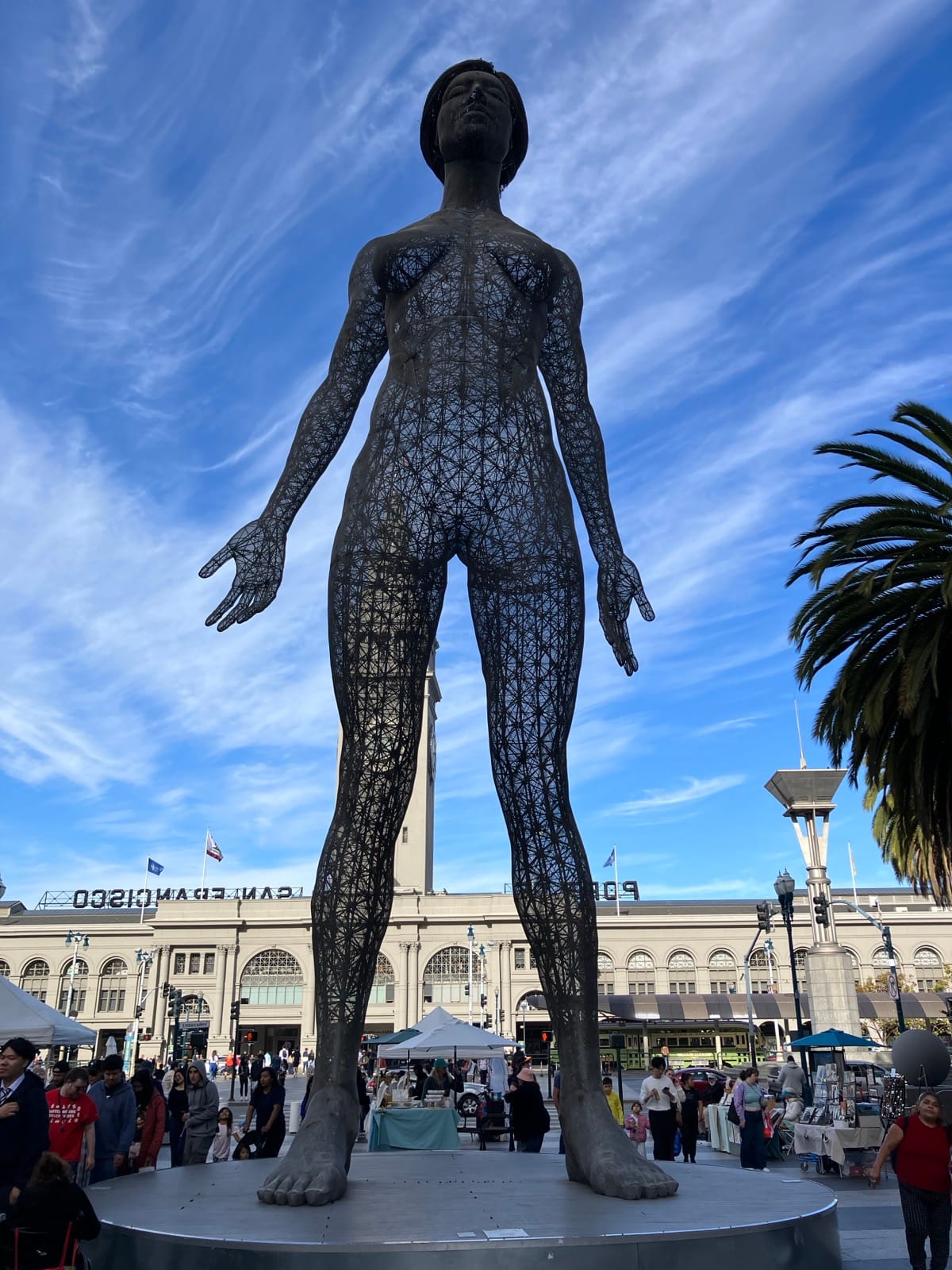
Growing up in sprawling Chengdu, I’d always considered San Francisco’s bustling commercial zone what a “real” city should look and feel like. Monolithic skyscrapers, headquarters in close quarters, commuters in suits and ties all squeezed into less than half a square mile at the northeast tip of the city. Walking in the Financial District, I was a part of something bigger than myself and instinctively picked up the pace. Then the Embarcadero offered a pleasing buffer between the concrete jungle and the waterfront. Corporate half-marathon runners, the historic F Line streetcar, and tourists and protestors all sailed back and forth along the corridor. In their stillness, the grand Ferry Building and R-Evolution wire sculpture (debuted at Burning Man in 2015) faithfully witnessed the urban hustle.
The Embarcadero planted a seed years ago. The 22-story apartment buildings standing right at the edge of the Financial District stunned us with their breathtaking views of the bay and the fact that they were rent-controlled—$3,000 a month for a one-bedroom, one-bathroom unit as of 2017. But the apartment complex, built in the 1960s, had always been a prominent fixture of the Embarcadero scene. The buildings blended in so seamlessly with the surrounding high-rises that we never assumed they were rentals within our budget. The Embarcadero Plaza and Ferry Building merely three blocks away, the location was unmatched and familiar. Infatuated with San Francisco during that first encounter with the Embarcadero in 2008, the 19-year-old newcomer to America could never in her wildest dreams have imagined living here, let alone with a significant other. Maybe this was the place to belong after years of transience? Or maybe moving in with a loved one for the first time offered immense comfort and peace in knowing, even inside one of the city’s most vibrant hubs, that we were building a little home together? Cole Valley was quaint, but times there were reckless. Moving away with a boyfriend made it easy to move on.
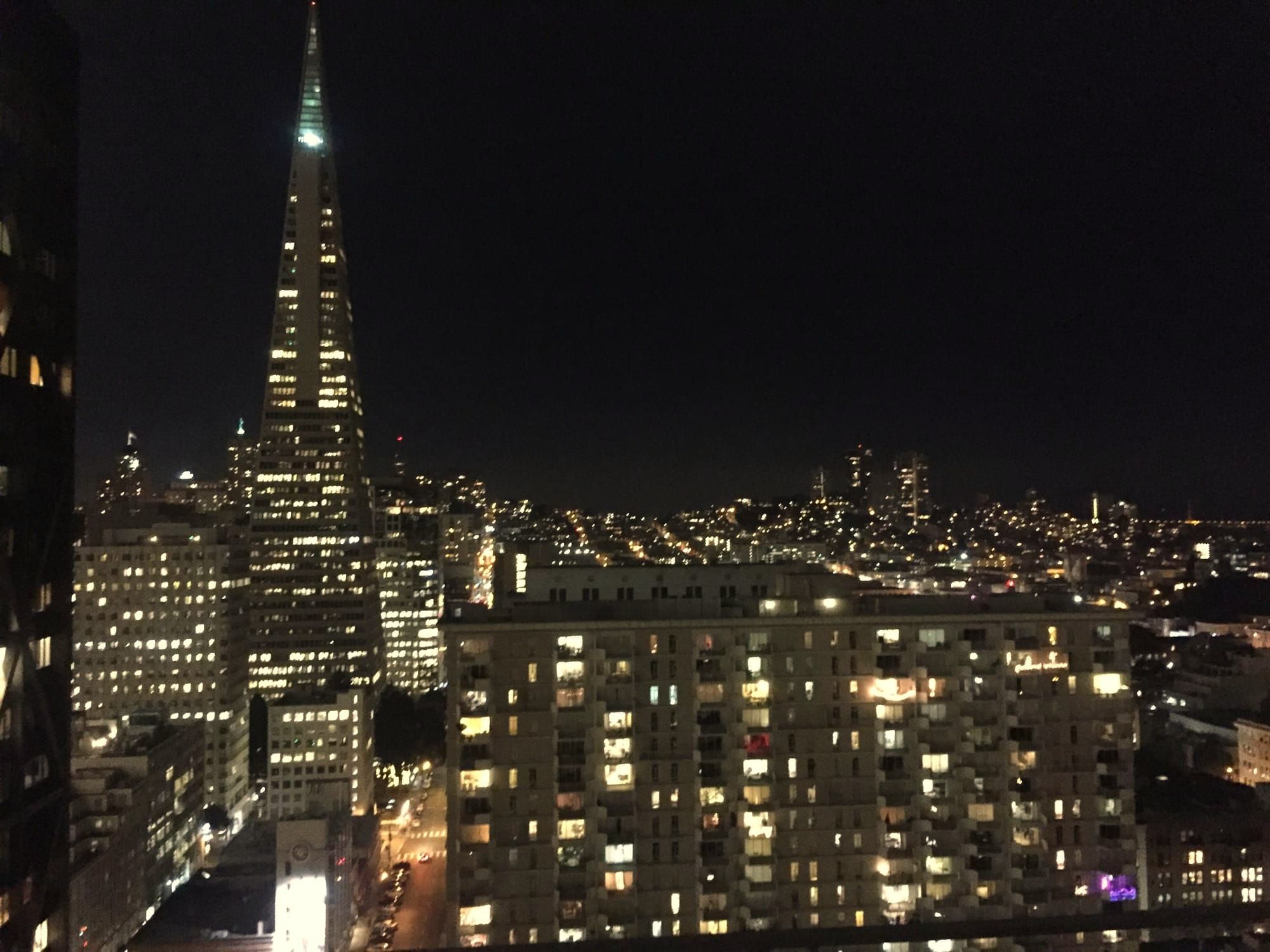
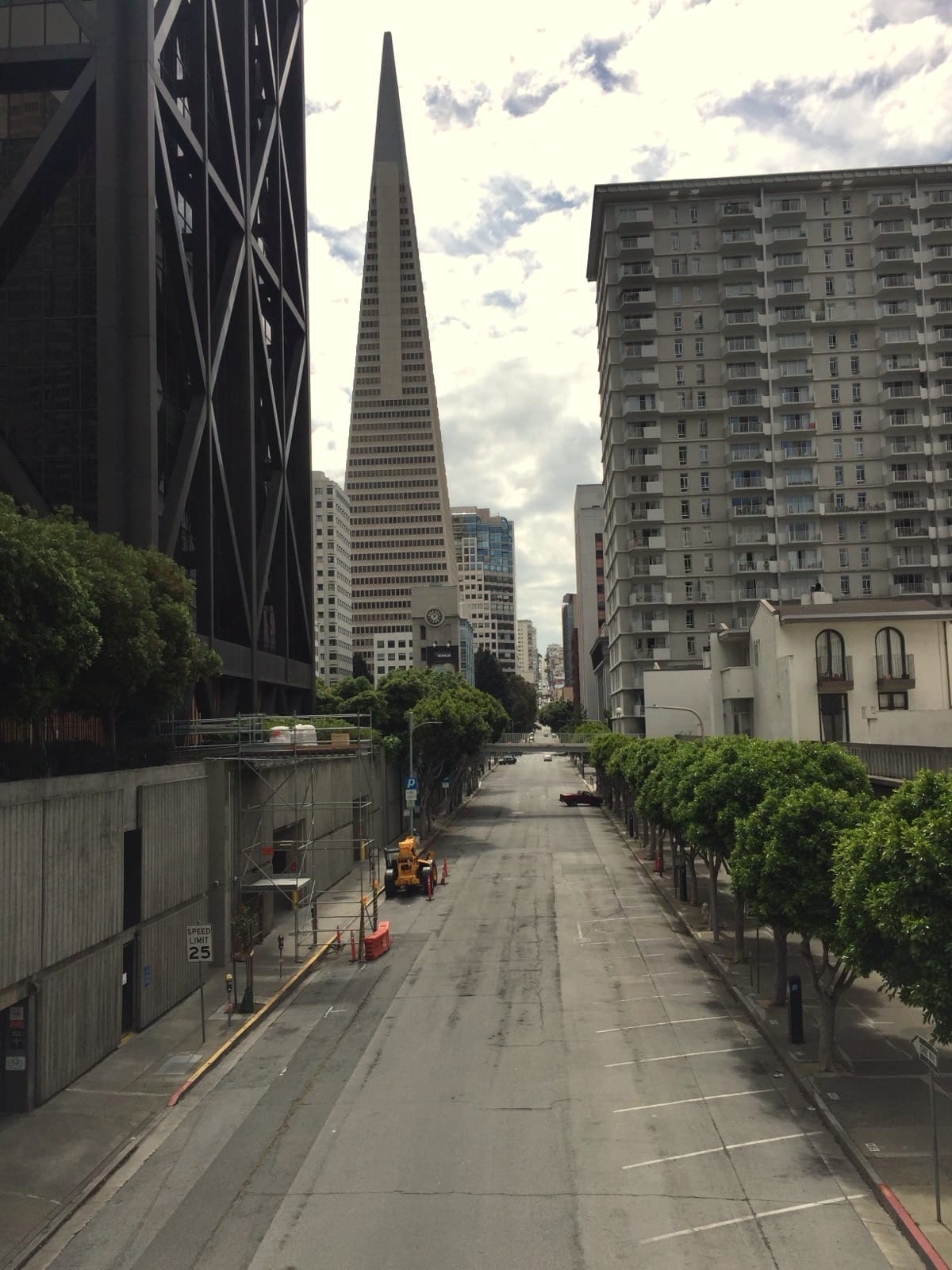
Fleeting adventures with many morphed into slow wanderings with one, but we did start out with a housewarming open mic night that crammed over 30 friends into a 680-square-foot apartment. The ensuing ruckus somehow didn’t lead to a single noise complaint, but now in our late twenties and living in an all-business part of town, we felt too grown up to throw frequent house parties. In fact, our excursions all over the Embarcadero were anchored by a relationship that finally felt more like a refuge than a fever dream. Even the daily commute turned into delightful strolls together for two years, during which both of our jobs were within walking distance of home. Our corner unit overlooked Jackson Street, which crossed through the historic Jackson Square and ran all the way up to Chinatown. The imposing U.S. Custom House stood unfazed across the street from us, the tip of the Transamerica Pyramid in the background piercing the sky. Our bay window framed a gorgeous cityscape, and we basked in the glow of the urban surroundings every day.
Since we lived in a city called San Francisco, even its conventional business district was peppered with quirks. Engines revving through the empty streets, glass recycling at a nearby Greek restaurant, and shrill cursing all just had to happen when everyone was sound asleep. A popular dog-walking app allowed us to encounter eclectic characters within walking distance. A senior three-legged, a chronically neglected, a constantly tugging, a duo, a trio. We walked all over the Financial District and the neighboring Telegraph Hill, North Beach, and Nob Hill with these dogs. We were constantly bemused by absent owners who were commercial pilots or couch potatoes, a PhD candidate who was clearly high when we dropped off her spunky dachshund, or the flirty dog mom of a cute-as-a-button spaniel named Honey. During a particularly odd week, multiple dogs whimpered all day and night inside one of the 20 units on our floor, so persistently that we reported the suspicious neighbor to building management. Shortly after our call, we spied from our balcony two individuals emerging downstairs in the plaza outside, dragging at least 10 dogs along and swiftly disappearing into the night—an illegitimate pet-sitting ring of two dogged hustlers.
Rooted in our humble abode, the newly minted couple not only braved the city’s eccentricities together but also ventured away to Los Angeles, New York City, Boston, Athens, and Chengdu. We each also traveled far for work to Shanghai, Hangzhou, Dongguan, and Hong Kong, leaving the other longing for reunion back in the City by the Bay. We knew our apartment would be a haven once we returned, jetlagged but relieved.
On the outside, the Financial District resembled the setting of a science fiction movie during the first shelter-in-place weeks and months, the last human construct still standing tall before Homo sapiens’ ill-fated demise.
The city’s pigeons, deprived of human activity, remained strangely in place without sheltering. On a sunny day, one would be gravely mistaken to assume the birds were sunbathing. “Thank you for practicing social distancing” signs popped up in the most “crowded” spaces; people stood six feet apart waiting to enter the only Safeway in the area, spooked by the invisible virus and one another. In spite of (or because of) the distance, tension occasionally broke, with one guy or gal yelling profanities at the store clerk while demanding access, or at the line for meekly complying with “fucked-up rules” because “COVID is a hoax!”
Inside, though, the safe haven that was our tiny one-bedroom apartment gently contained our fragile bodies and psyches, so gently that even growing indoor plants became a pastime. (One particularly stubborn chia seed ended up touching the ceiling in just six months.) For extra safety during a mandatory citywide curfew, we built a fort out of bedsheets, bar stools, and college textbooks. Underneath, the movie we watched was not science fiction; that would have been too uncanny.
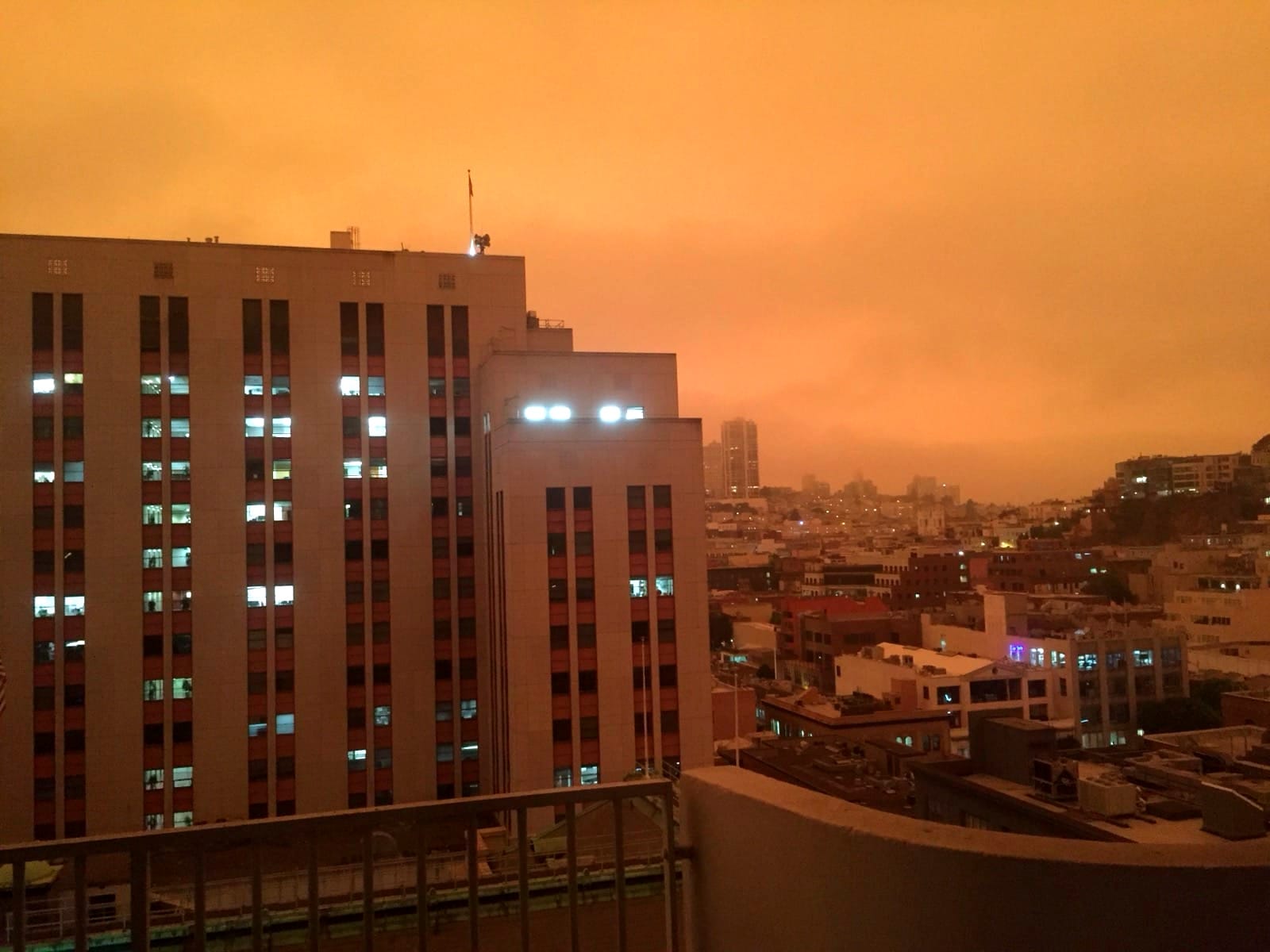
But the Financial District movie in those days had to be of the post-apocalyptic subgenre, especially on September 9, 2020, when the skies above San Francisco turned burnt orange. Around seven thirty in the morning, I woke up in dull pain from a wisdom-tooth removal surgery that I somehow dared undergo just the day before. I sipped my liquid breakfast against the backdrop of an eerie sky, but didn’t think much of it. Perhaps it was just a particularly smoky day amid yet another wildfire-plus-heatwave season in the Bay Area. Sure, it seemed peculiar that lights were on across the skyscrapers outside our bay windows, as if it were dusk. But past experience suggested that it would simply brighten up as the day went on.
As the clock inched closer to nine, it suddenly struck me that something was off. I had logged into my work laptop for yet another day of work from home. But the day wasn’t any clearer or brighter; the persistent burnt orange shade had only intensified, enclosing the entire city like a weighted nighttime blanket more stifling than comforting. Already a liminal space thanks to months of shelter-in-place, the city now turned Mars-like. Puffy-faced and unable to speak after the surgery, I clumsily pointed at the sky and exchanged wide eyes with my husband as he scouted Reddit for clues.
A little before ten, I was catching up on Slack with a Toronto-based colleague, still dazed but sufficiently distracted from the facial pain. Typing away, I caught myself in an abrupt, out-of-body moment, noticing that this colleague was likely having lunch in his high-rise condo in Canada’s most populous city; fall there must be pleasant. Unaware of the Blade Runner–esque day we were having here in San Francisco, he inquired about the status of a project, to which I responded promptly, as if it were an ordinary workday exchange. The rest of the day grew darker and smudgier before the hidden sun eventually set with little warning.
Julia, our apartment’s front desk lady, was all masked up but still “in office” the next day. She exclaimed that throughout her 30 years in San Francisco, she’d never encountered a day like this. Her reaction was not a surprise. 2020’s wildfires across California were some of the largest the state had ever witnessed. The smoke from multiple fires (including ones in neighboring Oregon) was so dense and high up in the atmosphere that it completely scattered the sun’s blue light on September 9, 2020; only red and orange made it through.
Thick fog and heavy clouds enveloped the city for another week or so, as if to ruminate some more before allowing all seven colors of sunlight to return in full force. The body continued to do its unseen magic in recovery; the second round of green onion shoots sprouted seemingly out of nowhere; heatwaves and heavy smoke kept the windows shut and fans running at high speed. My gourd-like face remained numb, but did light up at the sight of that first golden sunset a week after Orange Day.
Masks persisted alongside growing immunity, Stop Asian Hate protests, and reopening shops along the Embarcadero. Three years into married life, we were rooted in our safe haven of an apartment and wondered what else was simmering in these strange, strange pandemic days.
Part 4 coming soon in November 2026.
Savoring this story? Subscribe free for monthly essays that stay with you, plus first-year access to The Side View, a private letter about what happens between the published pages.
Prefer a one-time contribution? Support here.