The Boy who Played with Girls: Part 1
A very brief ode to an old home

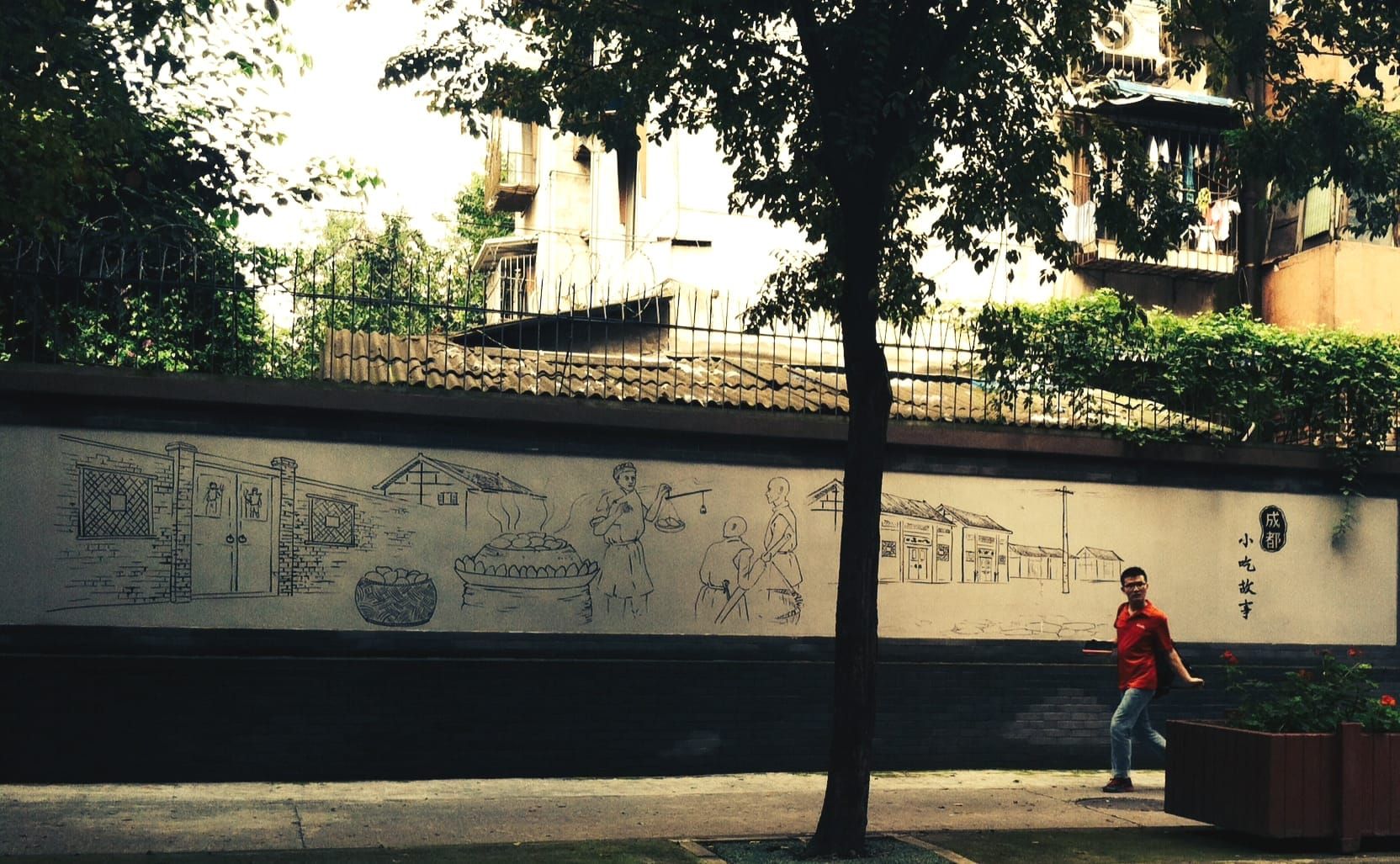
The Boy who Played with Girls is a three-part series that kicks off 2026 Chinese New Year, the Year of the Horse. It is also a love letter to my hometown, the city of Chengdu.
After a decade of residing in various parts of San Francisco filled with fellow young adults, we now live close to a few public schools on the border between two Peninsula towns called Millbrae and Burlingame. A sight rarely seen while in the city, morning drop-off and afternoon pick-up traffic is now a daily routine on several streets near us. The beginning of the 2025-2026 school year coincided with the Indian summer in the Bay Area. So even though it was October already, summer-like energy was still palpable. Leaves were almost rainbow-colored already, but still basked in the last heat wave of the year. A squirrel darted across the electric wire, just as a crowd of young children skipped out of the school to greet their caretakers, waving goodbye to one another. On this sunny afternoon, my post-lunch walk took me to a nearby elementary school at the end of the school day. Little boys and girls bounced on the sidewalk. One hand holding her caretaker’s, the other caressing flowers and tree trunks, a little girl hummed her favorite tune while her older brother strolled ahead. Their small and spunky figures reminded me of my toddler son, still in daycare but growing up so fast that in just three or four years, he’d be the one skipping back home from school.
I revel in the energetic and innocent childhood noises during school pick-up hours, a welcome break from a series of solitary activities each day. The last time I wholeheartedly embraced these noises was when I was a child myself. Sandwiched in between were over two decades of ambivalence towards young children. During that long period of childlessness, school-age children hopping and cheering never registered with me more than any ordinary events of the day. Now as a mother, not only do I see my son in these children, I also see an image of my own childhood self, wearing that same tiny backpack and floral summer dress. Old, grainy photos of early childhood on the other side of the planet emerges in my mind’s eye. Kids are mirrors.
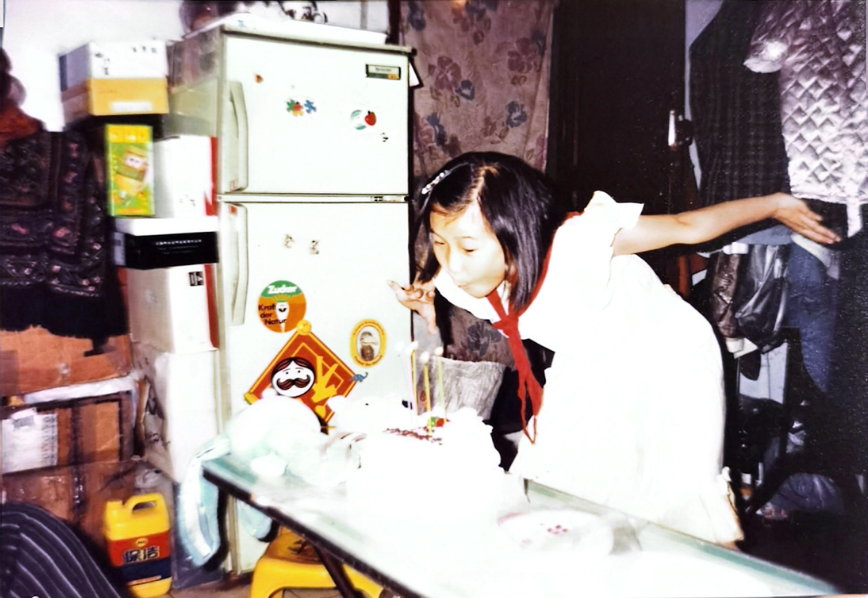
That skinny six-year-old girl blew out her birthday candles inside her old home in Shang Xiao (商校). She had just finished the first semester of elementary school, one affiliated with Sichuan University and located right in the heart of the stunning university campus. She lived with her parents in a tiny one-bedroom, first-floor unit inside a four-story red brick apartment building. About 15 of these old, sturdy apartment buildings inside Shang Xiao - a roughly 15-acre square-shaped residential community just southeast of Chengdu’s city center - were assigned housing units for faculty members of Sichuan University, where her mother worked as a German language instructor for several decades.
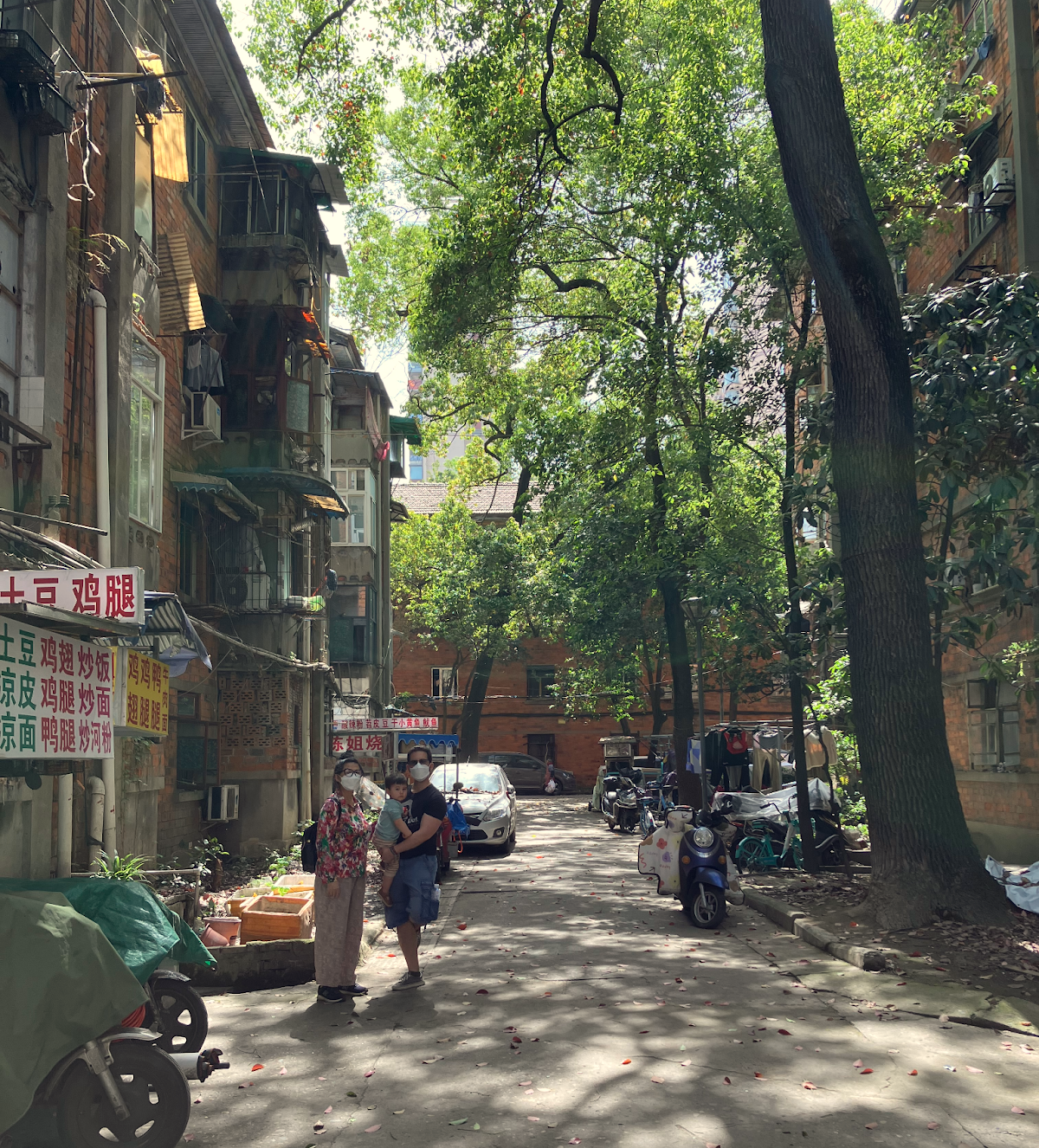
Despite a restrained living condition commonplace for so many Chinese families with young children growing up in the early 1990s, she never felt unfree or impoverished. On the contrary, Shang Xiao as a community was so full of vitality, a village in the truest form, a treat for the five senses in all seasons of the year.
When an abrupt “explosion” would periodically be heard in Shang Xiao, we children always knew to follow our noses to the street vendor that had just finished making a bag of yummy popcorn. The popcorn cannons that they used, so popular during my childhood, were such a spectacle. Street vendors usually parked themselves and their elaborate equipment in an open space. From afar, whenever I saw a man sitting on the street calmly spinning the handle of a teardrop-shaped iron container, with fire beneath the container and a giant rubber bag nearby, my heart rate rose immediately. As a passerby and a child, my desire to stop and stare always conflicted with that of running as far away as possible, because no one ever knew when that man would stop spinning the handle and start attaching the rubber bag. But as soon as he did, a crowd had already formed; onlookers young and old alike squinted their eyes, covered their ears, and held their breath. Something so thunderous and so delicious was about to happen: The man discreetly pulled the lever on the container, and “BANG!” Enormous pressure was released, and a new batch of popcorn magically appeared in the rubber bag, sending the warm and nutty aroma of fresh popcorn high up in the sky. Oh, what a feast on a dry winter day in Chengdu!
On a humid summer evening though, smells of mosquito repellent incense enveloped the community. Plugged-in electric devices or burned mosquito coils emitted the most distinct odor that was both fragrant and stifling, an appropriate mix considering their main ingredients derived from flowers that naturally repel insects.
Unlike mosquitoes, germs circulated all year round in a dense community like Shang Xiao. The nauseating scent of freshly boiled Chinese herbal medicine concoctions could only be surpassed by its even more overwhelming taste, but young kids everywhere must reconcile between a nasty bowl of dark-colored, ominous-looking medicinal soup and the wonders it did for curing fever, cough, or runny nose. (A cup of freshly brewed black coffee that my half-Cuban, moka-pot-loving husband adores? Unfortunately to me, it looks, smells, and tastes exactly like freshly decocted Chinese medicine: bitter, pungent, and stomach-turning. Ugh!) Unpleasant medicinal aura spread from household to household, mixed in with but not inhibited by a cacophony of other neighborhood smells from mosquito coils, spices, fried pork lard, and chicken droppings.
That’s right. Chickens, along with stray cats and street dogs, roamed around Shang Xiao all day long. They were nobody’s poultry or pets, but (mostly) peacefully coexisted with humans. On a gorgeous spring day, cats sunbathed, dogs scouted, and chickens munched on anything that seemed edible.
Occasionally, when a blaring car alarm (still a relatively new sound for China in the early 1990s) disrupted the rhythm of the day, animals howled, and children playing outside erupted into screams. But quickly and splendidly, the symphonic roar of woks on high heat stir-frying the beloved twice-cooked pork (回锅肉) drowned out those sudden noises. It was almost lunch time again. A long line formed at a makeshift dumpling stand near the community gate; the woman who folded dumplings there every day started working extra fast. Other street food vendors had been preparing for hours as well, selling out bags and bags of hot and sour noodles (酸辣粉), ciba cakes (糍粑), and tea eggs (茶叶蛋) to construction workers, school children, and retirees. A craftsman packed up his cotton fluffing bow and station, and an enterprising recycling worker on a flimsy bike finished his last song of the morning, his resonant chant heard across the entire neighborhood:
“收废品儿!收旧冰箱,旧电视,收音机!” (“Collect waste items! Collect old fridges, old TVs, and radios!”)
For children growing up in Millbrae or Burlingame in 2025, Shang Xiao may seem chaotic. For children like myself growing up in Shang Xiao in the early 1990s, the community was both home and paradise.
Continue to Part 2 here.
Savoring this story? Subscribe free for monthly essays that stay with you, plus first-year access to The Side View, a private letter about what happens between the published pages.
Prefer a one-time contribution? Support here.