The Boy who Played with Girls: Part 2
Beneath the surface of grades, honor badges, and track and field medals hid these clumsy and tender moments of early childhood in Chengdu. But Fangtan, the boy who always played with girls, was never clumsy.

The Boy who Played with Girls is a three-part series that kicks off 2026 Chinese New Year, Year of the Horse. It is also a love letter to my hometown, the city of Chengdu.
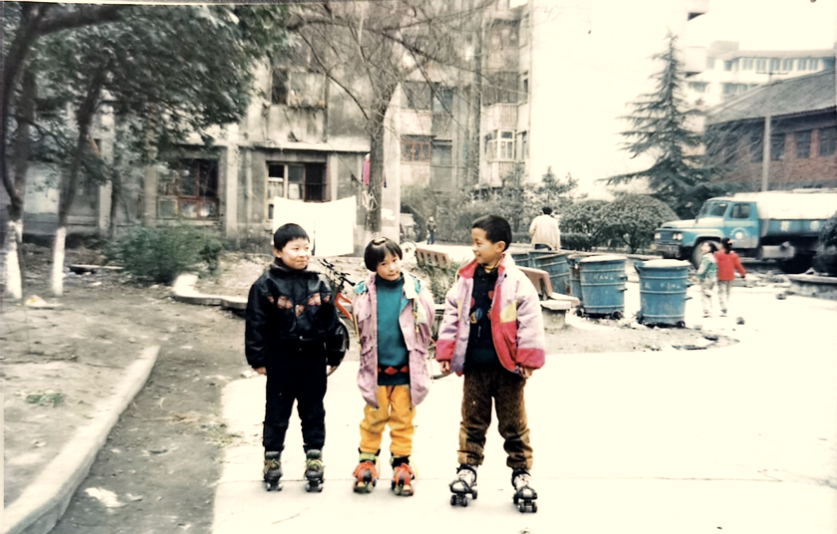
The apartment buildings that steadfastly witnessed the dynamic energy of China in the late 1980s and early 1990s also housed many of my friends from elementary school. As if all the commotions from street merchants, animals, and cars weren’t enough for the bustling community, the crooked, narrow, and tree-lined roads in Shang Xiao regularly transformed into buzzing playgrounds.
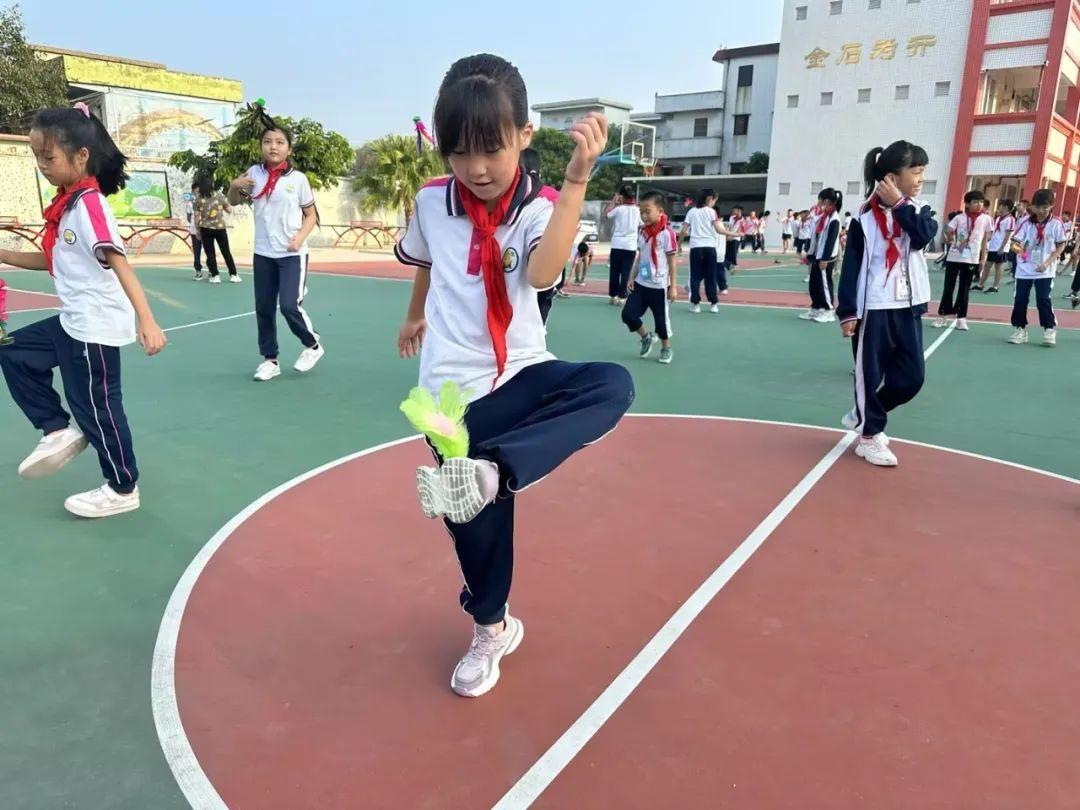
Whenever school was off, children of all ages fanned out for all sorts of free play outside. There were no play structures like slides, swings, or seesaws, but that didn’t stop us kids from creating our own. We’d have no problem finding two trees as anchor points for a hammock or a Chinese jump rope (跳橡皮筋); the neighborhood “plaza,” a gathering spot with benches, public bathrooms, and large blue trash cans on one side and a small wooded area on the other, made for a perfect space for hide-and-seek; kids brought toys and games of all kinds, from jianzi (踢键子) to long rope (跳长绳, similar to Double Dutch, but with one rope), from handkerchief (for Drop the Handkerchief game (丢手绢), which much later I found out to be similar to duck, duck, goose) to badminton set, and various games would break out.
Even made-up games sent kids into a frenzy too. One summer, a hazing-like “campaign” swept across Shang Xiao. Younger kids were told by older ones that they shall collect abandoned cigarette boxes in the neighborhood (some hidden in “secret tunnels”), flip open the cover, and discover combinations of code, one of which would win a big prize! Of course, the “campaign” fizzled out at the end of the summer with no prize and lots of dirty hands.
Laughs, screams, chants, and songs often lasted into nighttime all year round; this was when a few parents from different corners of the neighborhood began shouting their children’s names at the top of their lungs, calling home a few particularly mischievous boys (and one girl, not me) for dinner.
Until a certain age, boys and girls played together for the most part, and many games were popular among all children regardless of gender or age. However, certain games like Chinese jump rope and jianzi were widely considered to be girls’ games. Girls would form teams and compete any chance they got, thanks to the light weight and portability of the items needed for the games. Most girls in the neighborhood knew the chants, the routines, and the foot or kick patterns of these games. These early childhood rhythms were so ingrained in my brain that decades later, when I demonstrated a basic Chinese jump rope routine for my toddler on the other side of the world, I immediately recalled the chants and foot patterns, as if they were never forgotten.
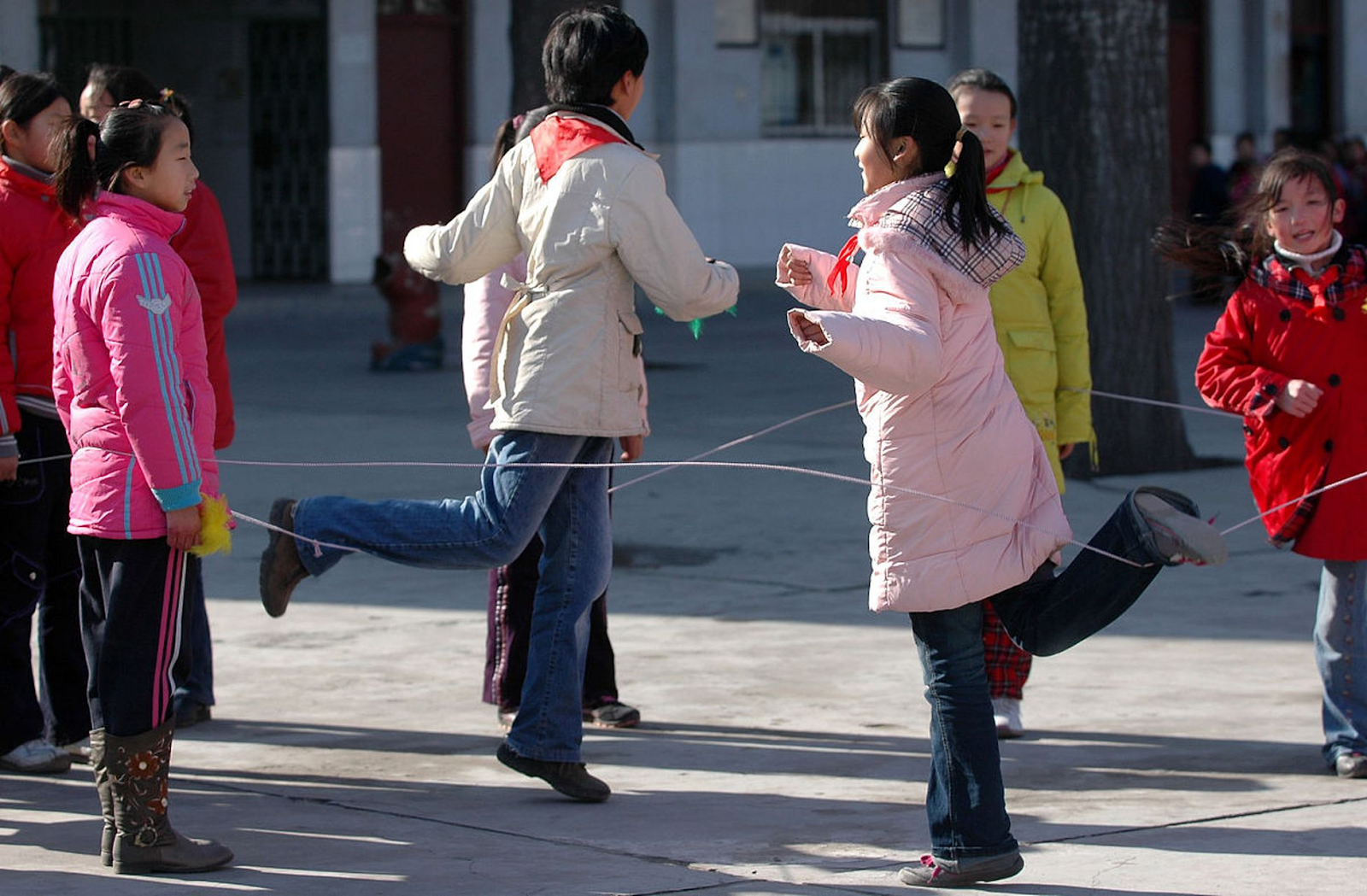
Fangtan Lu, an elementary school classmate who also lived in Shang Xiao, was the only boy that regularly participated in the girls’ games. With a clean buzz cut, baby face, medium build, and neutral clothing, his look wouldn’t stand out among any group of young children in a classroom. Where he might stand out was on the playground; he almost never played with other boys or showed any interest in boy-leaning activities like roller skating or ball kicking, but always collaborated seamlessly with girls in Chinese jump rope and jianzi. He was in fact so skilled at these girls’ games (and proudly so) that at an age of intensely separated gender-typed play, girls would prefer him on their own teams over another girl who wasn’t as good. We never found his company strange or off-putting, and naturally welcomed him as a part of us. He blended in perfectly with the smaller, more intimate, and more expressive dynamics of girls’ group play; his personality, the way he carried himself, and his voice and tone, although not flamboyant, seemed more feminine at a young age.
Even though unable to articulate our emerging awareness around gender and sexuality, we school-age children weren’t clueless. Growing up in a conservative East Asian culture, our exam-oriented education system offered zero formal teachings (even the age-appropriate kind) around sexuality and gender identities. Parents rarely provided guidance either, even during the particularly sensitive adolescent years. As a result, kids of all ages resorted to inaccurate (and definitely not age-appropriate) sources like TV shows, gossip, and video games to channel our developmentally-normal exploration around boy-girl-related topics.
I recall distinctly that in second grade, a “popular” girl in my class exclaimed in all seriousness, “My friend didn’t fully understand love until she was in third grade!” Everyone seemed to know who the “Xiao Hua” (校花, prettiest girl in school) or “Xiao Cao” (校草, cutest boy in school) was. The never-ending rumors of “who likes whom” spread like wildfire, but not wild enough to reach the teachers’ office. And a torrent of questions swirled around the entire school when an athletic tomboy dominated in yet another 50-meter sprint during the annual sports meet, “Have you seen her use the bathroom?” “What does she wear at a swimming pool?” “Does she like girls?” “I heard she has a tattoo of her girlfriend’s name on her wrist!”
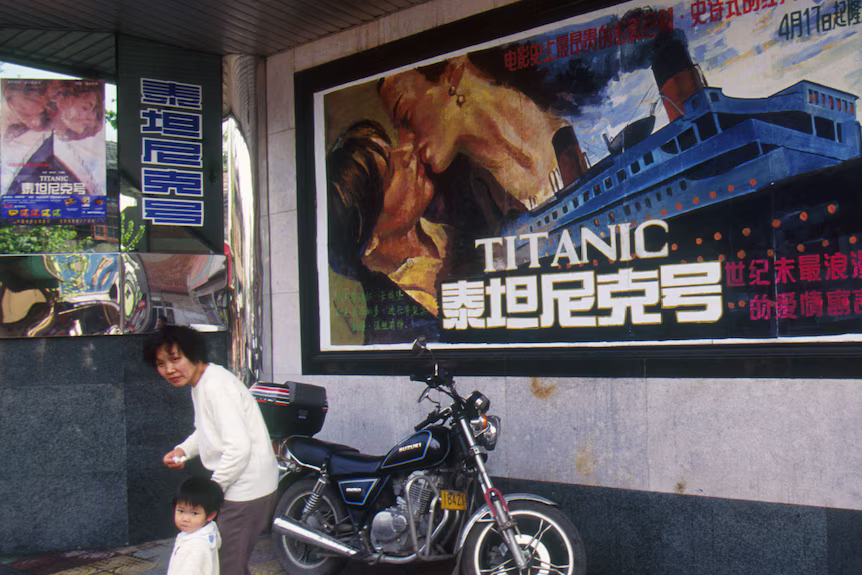
All of these inquiries occurred during recess and after school when parents weren’t home yet. We children quickly learned to hide the chattering from adults, who would surely consider it inappropriate, distracting, and even morally wrong. I recall in our third-grade Chinese textbook, an overall lovely letter written by a mother to her young son also detailed her concerns for him growing up in late 20th century China; one of the concerns was “homosexuality.” During a moral education class (思想教育课), the teacher casually mentioned the society’s need to stay away from morally corrupted activities such as gambling, stealing, and pornography, only to be confronted by a daring eight-year-old boy’s genuine question, “Is Titanic pornography?” (The movie was released in 1997 and an instant hit in China.) I have no memory of the teacher’s response, only the entire class’ uproar.
One ordinary early evening after school and before my parents returned home, I tuned into the Discovery channel as usual. Instead of a nature documentary about sea animals, the episode centered around the topics of sexual attraction, featuring two American actors exchanging eye contact (and apparently also something called pheromones) in a restaurant. As a confused but curious nine-year-old, I brazenly asked my parents when they got home, “What is sexual attraction?” My dad was stunned for a split second, and then cried out in disbelief, “Ah?? What… what do you mean?!” Awkward and upset, he turned to my mom, who was more involved in my schoolwork, “Where did she learn this?!” My mom asked me more gently, learned about the episode, and explained to my dad, “Oh she just watched the Discovery channel…” To them, Discovery channel documentaries were perfectly educational and proper, but a subset about sexual attraction clearly were not. Once again, I have no memory of my parents’ response afterwards. Neither of them was equipped with the tools or knowledge to turn that moment into any semblance of education.
Beneath the surface of grades, honor badges, and track and field medals hid these clumsy and tender moments of early childhood in Chengdu. But Fangtan, the skilled and steady boy who always played with girls, was never clumsy, even towards the end of elementary school when everyone stumbled towards preadolescence years. Whether he was bullied by boys was unclear to me or ever even crossed my mind, but he was always safe with us girls.
Part 3 coming soon in April 2026. Subscribe so you don't miss it when it's out.
Savoring this story? Subscribe free for monthly essays that stay with you, plus first-year access to The Side View, a private letter about what happens between the published pages.
Prefer a one-time contribution? Support here.