A Strong Back 2: Part 3
In parenting reality, the truth seems to always lie in the uncomfortable grey of “Do whatever works, because every family is different.”

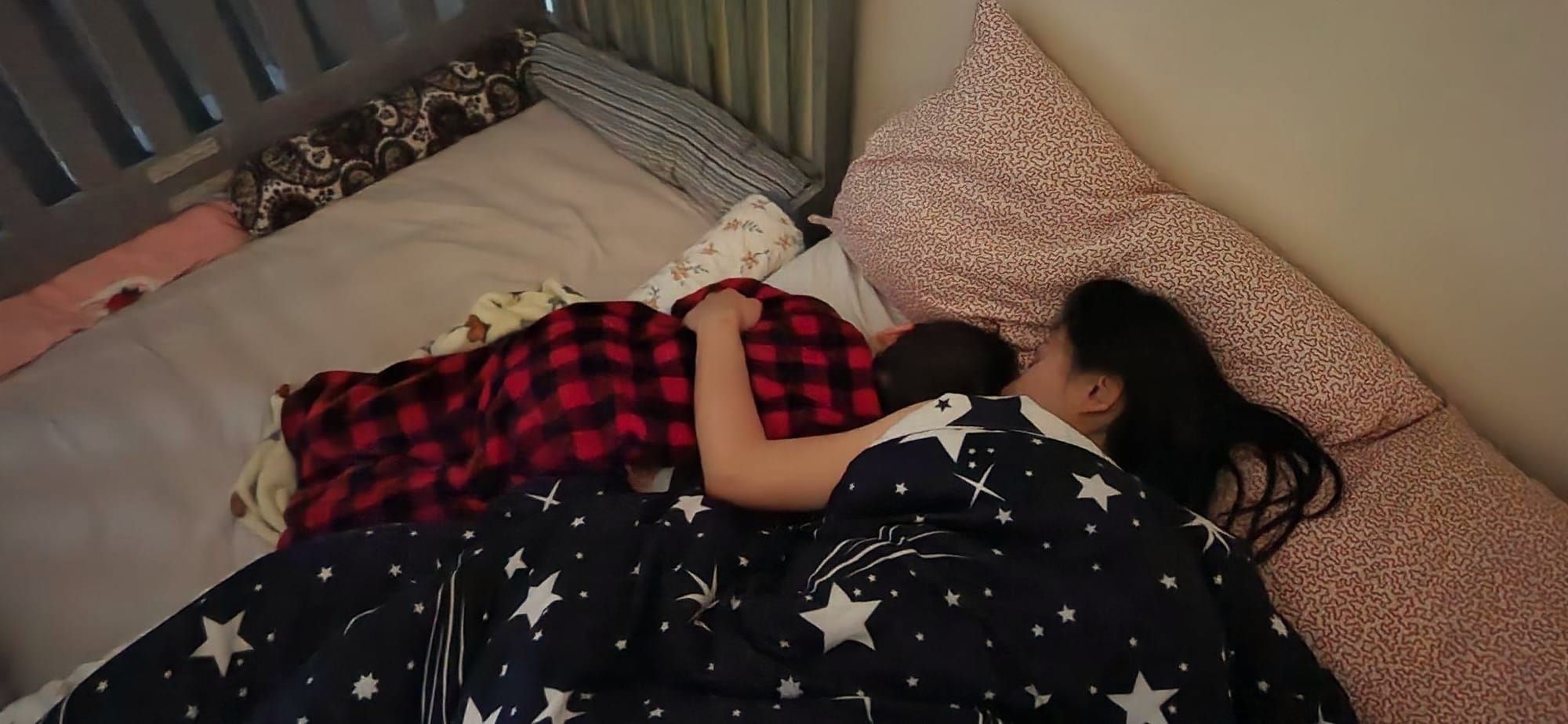
A Strong Back 2 is dedicated to those that are intimately acquainted with early motherhood. Read Part 1 here and Part 2 here. This is a personal story, not medical, counseling, or parenting advice. See full disclaimer below.
Eight months postpartum, desperate like so many sleep-deprived new parents, my husband and I hastily hired an infant sleep coach recommended by an acquaintance.
Consumed and confused by sleep debt and our son’s “strange” sleep patterns (strange for adults, normal for infants), we assumed that a “certified pediatric sleep consultant” would know more about “fixing” our baby's sleep “problems” and ensuring he had “enough” sleep (i.e., no more short naps, no more night wakings).
We also wanted to explore whether we could shift his “sleep association” from being rocked to sleep by mama only to something more manageable (for us) - perhaps bedtime music only, or being nestled in bed between mom and dad, or even being held in the rocking chair. The goal was to “free” me from pacing back and forth constantly for 10 minutes, 20 minutes, or even 30 minutes before the boy in my arms could finally fall asleep. My lower back wouldn’t be able to sustain that level of care as my son grew heavier, with no telling when he’d stop relying on motion and constant contact to fall asleep.
On the other hand, my husband and I would be more than happy to assist our boy; we didn’t particularly care for putting our son down in his crib and just walking out of the room, letting him cry and figure it all out by himself. We had developed a tendency to be almost overly responsive, which went against the “cry it out” approach. As a result, we were impossibly stuck between knowing that sleep training inherently involves baby crying without parental response and desperately needing relief.
I first learned about the concept of sleep training during pregnancy. Fellow expectant and new mothers asked questions about sleep training during a breastfeeding class that discouraged sleep training and endorsed co-sleeping. Little did I know how controversial these topics were until we were actually in the thick of coping with broken sleep.
On one hand, infant safe sleep practices were the official recommendations by the U.S. healthcare authorities. On the other hand, woken by a fussy infant, getting up from bed, walking over to the crib in a different part of the bedroom to pat the baby back to sleep multiple times a night, and still heading to work (at the office and at home) in the morning, meant we were continuously in a zombie-like state.
Reaching out to fellow parents a few months or years ahead of us, I was surprised to discover how often new parents co-slept or bedshared with their babies. Despite the official warning against bedsharing, many parents found out through trial and error that it was the only way for everyone to get some sleep. Equally surprised was a friend that, after giving birth and before being discharged, was required by the hospital to sign a document promising she wouldn’t co-sleep with her daughter. In reality, so many families seem to share a bed or surface, either following parent-infant instinct or out of necessity. Safe co-sleeping guidelines emerged as I investigated this topic further, but I worried about SIDS so much that co-sleeping felt too risky for us. On the flip side, other parents found that co-sleeping never worked for them, and sleep training was the only way out of sleep debt for the whole family.
Savoring this story? Subscribe free for monthly essays that stay with you, plus first-year access to The Side View, a private letter about what happens between the published pages.
Prefer a one-time contribution? Support here.
In her vulnerable essay on parenthood and writing, novelist Rachel Heng expresses, “As new parents, we search so often for some external validation, some authoritative guide that will save us from the terror of feeling our way through. But the advice on topics as varied as breastfeeding, sleep, and developmental milestones is contradictory and deeply personal.” As we navigated the confounding sleep terrain, we seemed to always arrive at the one piece of advice that was ultimately and disappointingly true, “Do whatever works, because every family is different.”
So what should we do? Confusion plus desperation make a good recipe for rash decisions. We convinced ourselves that at this point, we needed relief so much (and our son needed long naps and a good night's sleep so much) that we’d be willing to forgo responsiveness and let our son cry himself to sleep. Everyone getting much better sleep after just two weeks, as guaranteed by the sleep coach, might be worth it? “Independent sleep skills” that'd benefit our son for life sounded advantageous too? Plus, I could finally stop rocking the boy to sleep, saving my back from painful re-injury that could prevent me from taking care of him altogether, and saving my sanity from debilitating sleep woes.
It was a rash decision nonetheless. Our conviction stemmed more from coping with immense frustration than from believing in the benefits of sleep training. If anything, the decision to sleep train our boy felt selfish and unsettling, but also, a last resort. Even though sleep training was so widely adopted as a practice in the U.S., we were hesitant. Even though friends who sleep trained their children offered us stories and reassurance, we feared doing our son too much harm. The lack of a village nearby, the plight of nuclear families, the notoriously lacking parental leave in the U.S., and expectations on working parents all came to mind. Infant-parent secure attachment, basic trust during the first 18 months, and a number of other concepts I learned in counseling psychology classes also came to mind. But none of the system-level issues or theoretical concepts helped relieve us from feeling cornered and helpless in the moment.
So when the sleep coach prematurely declared in the intake call, “I look forward to you all having much better and calmer sleep in just a few days,” we cluelessly agreed to proceed, but still struggled to comprehend whether it was the right thing to do. In parenting reality, the truth seems to always lie in the uncomfortable grey of “Do whatever works, because every family is different.”
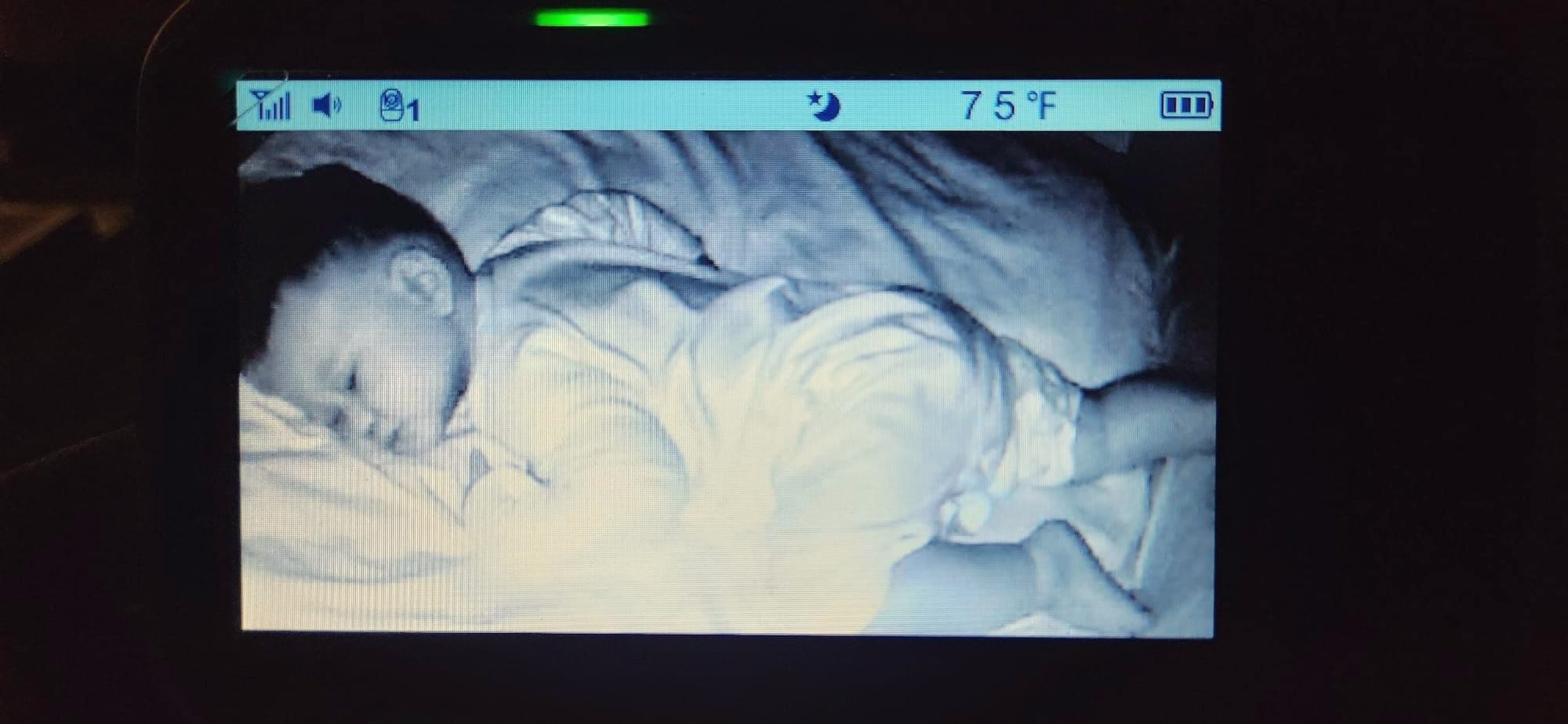
Our eight-month-old’s heart-wrenching and escalating cry broke us fairly early on in the two-week process. Something profoundly and instinctively raw was aroused from deep within our bodies.
We were "instructed" to keep the room completely dark and sit near the crib, as our son wailed alone, denied of his only-known sources of comfort for falling asleep. No more shushing, singing, or gentle patting was “allowed” either, as too much engagement or physical touch could “overstimulate” the baby. “Gradually weaning him off his current sleep associations would ultimately draw out the process,” cautioned the sleep coach, whose two-week guarantee would surely fail if we derailed from her rip-off-the-band-aid “sleep plan” for our son. We were “coached” to remain mostly quiet, invisible, and largely contactless during the entire time our son cried, until he fell asleep on his own in the end. “It is no longer your job to put your son to sleep. You are there to support while he works through the highs and lows before ultimately falling asleep independently.” The sleep coach wrote in her sleep plan document, which also set this expectation, “Night 1 can take approximately 45 minutes.”
My husband endured those 45 minutes on the first night. The sleep coach discussed the plan with both of us, who somehow agreed that it’d be too much for me to tolerate at least the first night of sleep training. Ripping off the band-aid also meant quitting my son’s main sleep association - my presence and motion while holding him in my arms - for everyone’s sake. It was assumed that the father would be the “tougher” one and his baby’s prolonged cry wouldn’t bother him as much. How erroneous and dangerous of an assumption!
For 40 minutes, I was in a fetal position downstairs in the living room, with no baby in my arms to sway and therefore no more back pain. Sobbing and consoled by my own mother, I heard my boy screaming in the upstairs bedroom and imagined my husband clinching his teeth and fighting every instinct in his body to not “overstimulate” his son. (This is a man who contact-napped with his newborn many nights during his seven-week paternity leave.) His heart rate must have been through the roof as he tried to “stick to” the “sleep plan,” while his infant son’s cry escalated seemingly forever. Having cared for our boy for eight months, we both knew that cry to the core. Despite the sleep coach’s more palatable choice of words - “Your son will be upset” or “He won’t like it” - we knew outright that his was not a cry of dissatisfaction or dislike. He was deeply afraid.
Meanwhile, the sleep coach was nowhere to be found. Attending the training wasn’t a part of her job, and she’d never asked to see our baby or even a photo of him. Granted, that’d likely make it harder for her to do her job well. A bitter taste in my mouth, a lump in my throat, a pit in my stomach - my whole body was filled with an uneasiness about how counterintuitive this process felt. When the screaming finally, oh finally stopped, a dreadful silence swallowed the entire house. The bedroom door squeaked open, followed by my husband’s trudging footsteps. Tearful and shaken, he let out the heaviest sigh. Rushing to hug him tightly, I got a glimpse of his eyes that were as confused and disturbed as mine. The relief from lower back pain felt minuscule compared to the painful roller coaster that everyone had just gone through. Regrets washed over me.
“After working with her, both of our little ones were able to sleep through the night at four months old!” The words of the acquaintance that recommended the sleep coach echoed in my mind. Her thrill both perplexed me and at the same time did not.
“Do whatever works, because every family is different.” We were back at square one.
Overwhelmed by the first night, our boy’s unusually tired and dazed demeanor the next day concerned us more (even though the sleep coach said it was normal). Dreading the start of every nap on day two, we attempted nap training our son, but ended up rushing to his rescue before he cried himself to sleep again. Our aiding continued into night two, when we picked up our screaming boy and scrambled towards the nearby rocking chair to calm him.
We rebelled against the sleep coach during the remainder of our time working together, making an already fraught transactional relationship even more awkward. At the end of two weeks, no goodbye, best wishes, or thank you was exchanged. Both parties ghosted each other swiftly with much relief. Other parents’ glowing reviews on the coach’s Yelp page, first reassured me (as fragile as that reassurance was) before working with her, now left me rattled. Money went down the drain, or towards an expensive lesson that sleep training didn’t work for our family.
An ugly transition to rocking-chair-aided sleep ensued. Most days and nights of the following month and a half, even hints of the “impending” nap and bedtime sent our boy howling. Previously signals of relaxation - sleepsack, book light, and music - all became troubling reminders of that first night.
As much relief as the rocking chair provided, months-long sciatica and lower back pain suddenly meant little to me compared to our dire attempts to remedy the harm caused by that first night. No matter how much our eight-month-old fought naps and bedtime, crying and kicking, we held him in the rocking chair until he calmed down and fell asleep at last. Drowned in the silence after the storm, we would then transfer our son to his crib carefully to not wake him, and leave the room. Along the way, through trial and error all in hushed tones, we developed unspoken languages to communicate in the dark (e.g., tapping each other’s foot three times to mean our boy had probably fallen asleep; mentally counting the number of songs to signal the amount of time passed).
Having rebelled against one authoritative guide that was the sleep coach, I hung on to a few others to justify our rebellion. Articles from seemingly unbiased sources (BBC), scientific research into safe co-sleeping practices, and Facebook groups where (almost entirely) mothers discuss all sorts of practical co-sleeping arrangements (room sharing, bedsharing, sidecar crib, floor bed) all became my new guideposts. The pendulum swung to the other side.
After further abandoning some suggestions from the sleep coach, finally, oh finally, we reached a point of regularly tear-free bedtime, thanks to the mighty rocking chair. Our initial goal of adjusting our baby’s sleep association and “freeing” me from swaying him to sleep was achieved. But the achievement felt anything but victorious, even if my back pain was relieved. That month and a half of sleep transition, although a drop in the bucket during the 18-year span our boy would be in our care, felt endlessly arduous for everyone. It tested our patience to the core. Early motherhood brought me to my knees...
“Use the knees and legs to lift.” I muttered to myself as I stood up from the rocking chair while holding my sleeping baby at 3am, sciatica largely gone. At 10 months old, his sleep and naps were still inconsistent, even though falling asleep in the rocking chair had been largely smooth. The night following the therapy session where I surprised myself with a strong back, my son’s overloaded body reacted intensely to teething, constipation, and daytime short naps. Overtired and antsy, he was going through so much, and woke up bawling at midnight. For two hours, nothing seemed to soothe him. My husband and I panicked; my mom woke up and tried everything she could think of, to no avail. Colic and a visit to the ER crossed our minds. Fearing regression but out of options, I resorted to vigorously swaying him back to sleep while painstakingly humming into his ears anything I could think of (the multiplication table song, and even Monica’s “Oh baby, baby, baby” chant from Friends).
My lower back was sore again, but not excruciatingly. I sat back down to rest in the rocking chair with my son in my arms. He seemed to be sound asleep again, as if hours of agony just now were nothing but a dream. The night was soon coming to an end; with just a few hours of respite left before we needed to head back to work again, we felt our way through yet another storm of early parenthood.
My husband caressed and kissed my lower back after he helped transfer our son back to the crib.
Aware of the slight but not unbearable ache, the still healing body from pregnancy weight pressing on the lower back, and the delicate scar tissue in the lumbar, I whispered to him, “No worries, I’ve got a strong back.”
Afterword: The final part of The Strong Back 2 series tells the story of a baby's shifting, unexpected, but also natural sleep trajectory that utterly humbles his parents. It does not intend to express to any struggling new parent that there's light at the end of the tunnel; nor does it intend to assess other families' situations or decisions. Regardless of how each family raises its little ones, all parents can agree that there are no guarantees in parenting. We labor through the murky and the messy, keep going, and keep loving.
Disclaimer: The content of this essay is based on personal experience. It is for storytelling purposes only and should not be considered medical advice. I am not a medical professional, and any decisions about your specific situation, diagnosis, treatment, or health care should be made in consultation with qualified medical practitioners.
Savoring this story? Subscribe free for monthly essays that stay with you, plus first-year access to The Side View, a private letter about what happens between the published pages.
Prefer a one-time contribution? Support here.