The Boy who Played with Girls: Part 3
The past has been knocking on the psychic door of an ever-changing self and nudging me to come home.

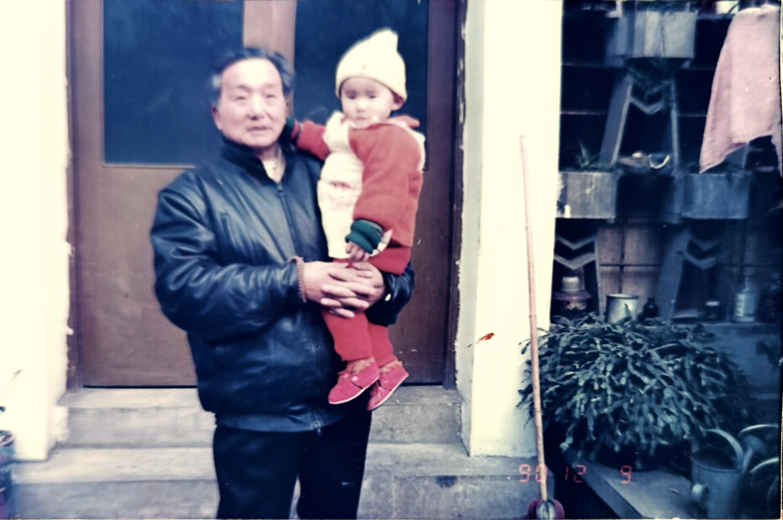
The Boy who Played with Girls is a three-part series that kicks off 2026 Chinese New Year, Year of the Horse. It is also a love letter to my hometown, the city of Chengdu.
Enjoy the entire series in one long-form essay here.
The summer before flying to the United States for college and leaving home for the very first time in 18 years, I was invited to a karaoke party with some elementary school classmates to commemorate the end of our childhood. Fangtan, the boy who played with girls, didn’t show up, and nobody mentioned or even recalled him. He faded from memory as soon as early childhood ended; so did the names of most faces from that day of drunkenly singing in a dimly-lit karaoke room. As newly-minted adults, boys and girls—men and women, I suppose—sat separately first, but put arms around one another for pictures later on, and confessed age-old crushes before most of us bade farewell, likely forever.
During the past 18 years I’ve studied, worked, and lived in the U.S., I spent the first half of my time desperately trying to abandon my past in hope of finding the slightest sense of belonging in a foreign country. The friendships I sought, the romance I chased, the accomplishments I pursued, were all oriented by that false hope. I thought in order to survive, thrive, and form connections here, I must bury the part of myself from there. Blinded by anxiety and culture shock during college, I saw no use for the first 18 years of my life on the other side of the planet, and therefore felt severely behind compared to my American peers at a southern public school. I never once thought of Fangtan and those childhood jump rope routines; they represented my foreignness that deeply unsettled me, and therefore, must be cast aside.
As a result, external validation like “You have no accent at all!” or “You seem so Americanized.” poured in, further distancing my present self from the past.
But what the conscious mind buries always finds refuge in the fertile and meandering river of the unconscious. The mystical river gently (and sometimes not so gently) flows through vivid dreams, uncanny déjà vu, or disjointed internal monologue. It doesn’t stop sculpting the emotional terrain until the conscious mind pays attention, no matter how many years it takes.
The second half of my life in the U.S., hardened fear and anxiety gave way to a more nuanced and honest sense of where I stood in history and on earth. Like a flower unfolding from a bud, dreams of childhood began to surface. Night after night, dreams about school exams (especially math), classroom desks and chairs, childhood faces and images, turned into wildflowers that bloomed along the riverbank after years of drought. The past has been knocking on the psychic door of an ever-changing self and nudging me to come home. It’s been whispering poignant tunes from a seemingly forgotten time:
𝄞 Hey you. Back home, your grandparents died. 𝄞
𝄞 Do you remember the layout of your grandpa’s Xinjin apartment that you used to visit with your cousin? What about your other grandpa who always picked up raw milk from the itinerant milkman every night, right outside his house in Pengzhou? Your mind’s eye can trace the contours of each room and your grandpa’s silhouette, can’t it? All you need to do is close your eyes and allow the tears to flow. 𝄞
𝄞 Listen carefully too. You will hear the captivating vibrato of Erhu, the swift flipping of Xuan paper for another poem, and the clacking sound of Mahjong tiles. When was the last time you attempted to play your grandpa’s Erhu, wrote Chinese calligraphy with your other grandpa, or played Mahjong with your grandparents? 𝄞
𝄞 How could you forget your grandpa’s famous-around-town, satisfyingly savory tea eggs? What an odd juxtaposition with the occasional smell of cigarettes coming out of the bathroom, where he continued to sneak a puff after his lung surgery and decades of chain smoking. Both the eggs and cigarettes disappeared when early symptoms of dementia and depression set in; so did his delightful Erhu songs and larger-than-life presence at the neighborhood Mahjong tables. Towards the last few years of his life, he could no longer maintain his rigid, decades-long 6pm dinner time every single day, as the voices he heard in his head overwhelmed his deep-seated identity as a former soldier. He asked his daughter, your mother, to spread his ashes in the river of his old home after he died, so that his descendants could visit and memorialize him whenever and wherever they saw a flowing body of water. 𝄞
𝄞 And remember how you realized, only in recent years after your other grandpa passed away in 2014, that you wished you had gotten to know him better when he was alive? What a literary, eloquent, and intellectual polymath he was. Because you’d only started to candidly embrace your own creativity after your mid twenties, it was all too late. But you’ll always hold dear the Chinese calligraphy he crafted for you before you left home for the U.S.; the well-preserved historical archive that he showed you of Shi Shi High School that both of you attended, just six decades apart; and the daily Xiang Gong routine that he not only loyally followed but also graciously taught you, a little child. Among a whole family of feisty personalities, he stood out as the most tranquil. He was so consistently mild-mannered that even now, you still couldn’t fathom the trauma that he—a school principal—must have endured throughout the tumultuous decades of early 20th century China… 𝄞
𝄞 You know, your daughter is now with them, some of her great grandparents. Even though she died almost 7,000 miles away from them, earthly distance matters little in their realm. They recognized her immediately a few years ago, and have been taking good care of her ever since. 𝄞
𝄞 What about the men that broke your heart in your twenties but opened your mind to the ingrained relationship patterns rooted in an upbringing you'd pushed aside for so long, but could no longer ignore? Notice too how the dreams and songs from childhood emerged around the same time you married your husband, whose wholehearted love and acceptance carried you to safety, and moved you to fully accept yourself as well? 𝄞
𝄞 Speaking of upbringing, now that your living child is born, you have nowhere to turn but to confront your entire life, first 18 years in China, and the second 18 years in the U.S. Because kids are mirrors, and they bring out things in you that you thought you’d blocked away for decades. They show you, so fully, just how splendidly endowed and deeply broken we all are. Just like you in the 1980s China, your own parents in the 1960s China, and your grandparents in the 1930s China, from the moment your son was born in the 2020s U.S., he’s wired for struggles, but lulled by the soothing melody of Mo Li Hua that you sing to him over and over. What a melting pot of humanity spanning a whole century and two of the most distinct places on earth. 𝄞
𝄞 How are you going to raise him, or re-raise yourself? 𝄞
𝄞 … Look at these children skipping and hopping back home from school. Remember Lin Ling, the boy from third grade who moved all the way to Germany with his parents, Wu Juan, the gal who won every 50-meter sprint, or Fangtan Lu, the boy who played with girls…? 𝄞
The old home is never truly lost.
My son, whether or not you are the boy who plays with girls, you will become someone’s memory from an old home, long after you part ways.
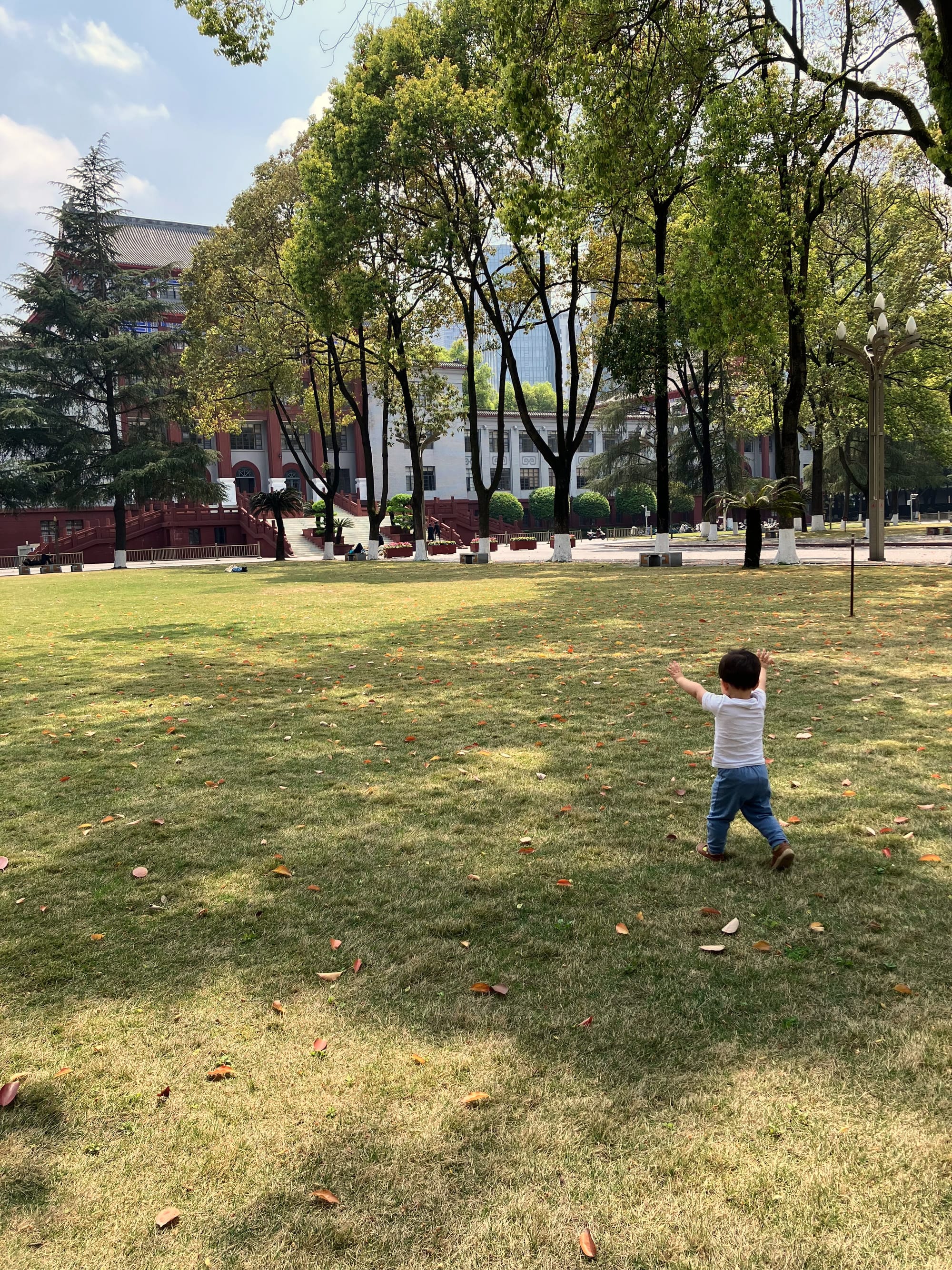
Part 3 concludes The Boy who Played with Girls series. Enjoy the entire series in a single long-form essay here.
Savoring this story? Subscribe free for monthly essays that stay with you, plus first-year access to The Side View, a private letter about what happens between the published pages.
Prefer a one-time contribution? Support here.